The 2030 World Cup is set to be a landmark event, spanning six countries and three continents, marking the tournament’s 100th anniversary. Spain, Portugal, and Morocco will serve as the primary hosts, with initial matches also scheduled in Uruguay, Argentina, and Paraguay to commemorate the tournament’s origins in South America in 1930.
Uruguay, the winner of the inaugural World Cup on home soil, will host the opening match on June 8, 2030, at the Centenario Stadium in Montevideo. Subsequent opening weekend games will take place in Buenos Aires, Argentina, and Asunción, Paraguay. These three host nations, along with Spain, Portugal, and Morocco, will automatically qualify for the tournament.
Host nations and venues
Spain, hosting for the first time since 1982, will stage the majority of the matches, with games planned for Madrid and Barcelona, and other cities yet to be finalised. Portugal will host World Cup matches for the first time, with games scheduled in Lisbon and Porto.
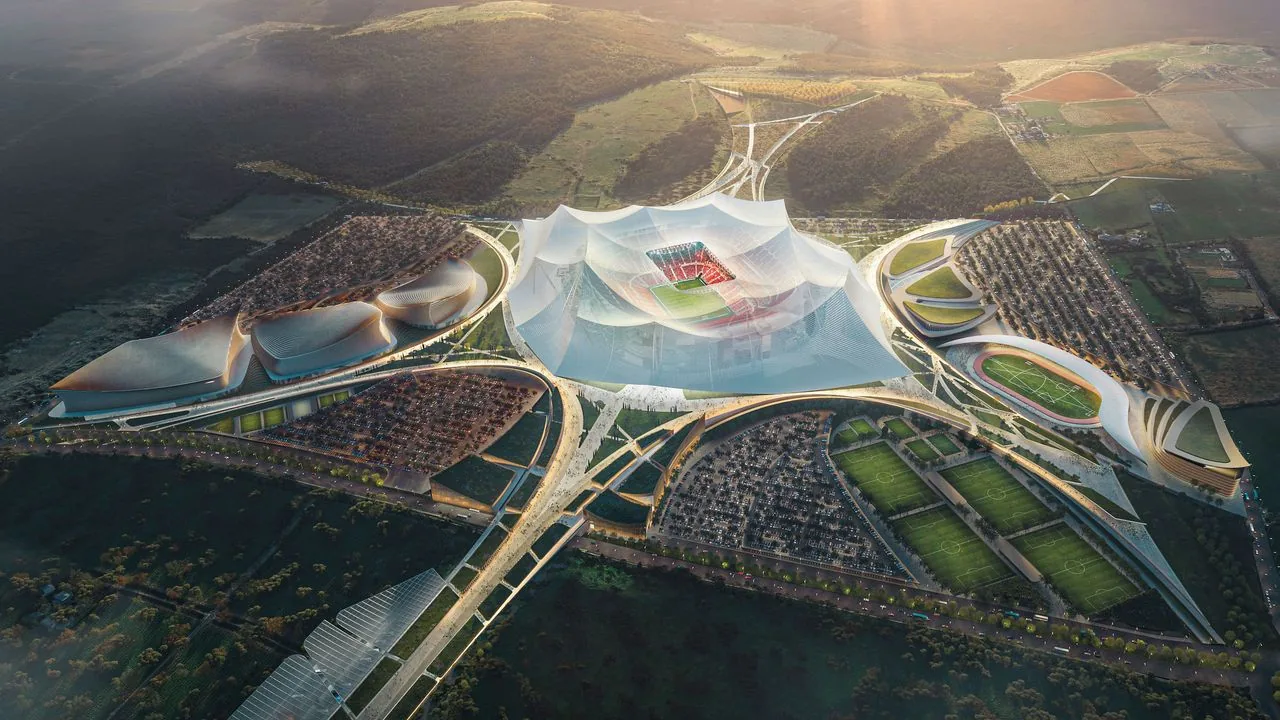
Morocco will become the first North African nation and the second African country to host the tournament, with matches distributed across six cities, from Tangier to Agadir. The country is also constructing the Grand Stade Hassan II in Benslimane, a 115,000-seat arena designed to resemble a traditional Moroccan tent, which is projected to be the largest football stadium globally.
The Centenario Stadium in Montevideo is undergoing a 30-month renovation, which will include adding a roof to most stands and increasing its capacity from 60,235 to 63,000. This stadium holds historical significance as the only one designated a Historical Monument of World Football by FIFA.
Contenders for the title
As the defending champions, Spain is considered a strong contender for the 2030 World Cup. With a core of players like Unai Simón (32), Gavi (25), Pedri (27), and Lamine Yamal (22), the team is expected to build on its recent success. Manager Luis de la Fuente’s approach is seen as a key factor in their potential to develop into a dominant force.
France, under new management with Zinedine Zidane, also presents a formidable challenge. Key players such as Kylian Mbappé (31), Dayot Upamecano (31), and Aurélien Tchouaméni (30) are anticipated to lead their campaign. England, despite recent setbacks, is also poised for a strong showing, with talents like Declan Rice (31), Jude Bellingham (26), and Bukayo Saka (28) in their ranks. However, the team faces questions regarding its attacking options.
Morocco, having reached consecutive World Cup quarter-finals, including one semi-final appearance, is another team to watch. Players like Achraf Hakimi (31), Chadi Riad (26), and Ismael Saibari (29) are expected to play crucial roles. Argentina, with Julián Álvarez (30) and Enzo Fernández (33), aims to remain competitive, while Portugal will rely on players such as Diogo Costa (30) and Gonçalo Ramos (28). Norway, led by Erling Haaland (29) and Martin Ødegaard (31), and Côte d’Ivoire, with Yahia Fofana (29) in goal, are also expected to be strong contenders.

The final match location
The location for the final match of the 2030 World Cup is currently undecided. Three stadiums are vying to host the event: Madrid’s Santiago Bernabéu, a redeveloped Camp Nou in Barcelona, and Morocco’s new Grand Stade Hassan II. While Spain has long anticipated hosting the final, recent reports suggest that Casablanca is emerging as a strong contender. FIFA is expected to make an official decision on the final’s venue in December 2026.
The tournament will feature 104 matches over approximately six weeks, concluding with the final on July 21, 2030.
Read Also
Source: theguardian.com