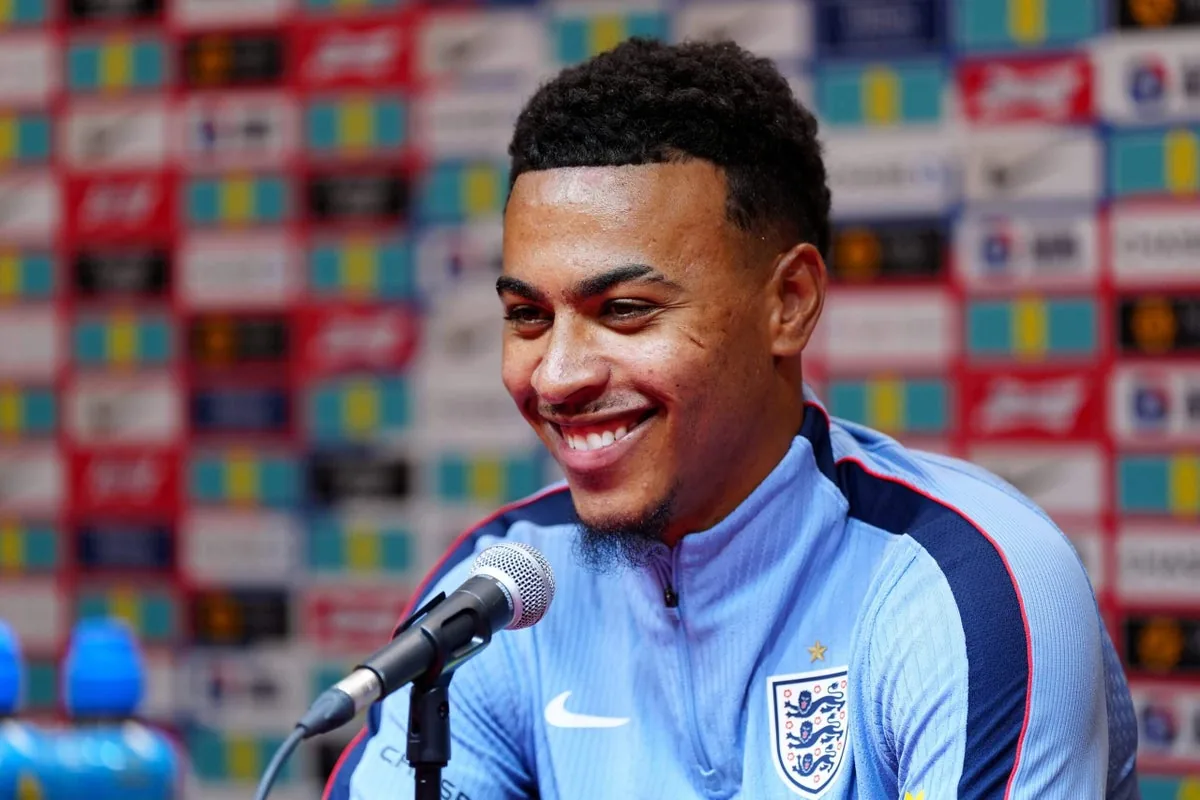
Chelsea has confirmed the signing of England international Morgan Rogers from Aston Villa. The 23-year-old forward has agreed to a contract at Stamford Bridge that extends until 2033 and is set to join Xabi Alonso‘s squad for the upcoming 2026/27 season. Rogers expressed his excitement, stating that Chelsea is the biggest club in London and one he has admired since childhood. He also highlighted his enthusiasm for the club’s project, the new manager, and the team’s direction.
Rogers arrives at Chelsea having established himself as a prominent young attacking talent in the Premier League. During his tenure at Aston Villa, his contributions included goals and assists that led to 40 goals in 85 Premier League appearances. Since his senior England debut in November 2024, Rogers has become a regular for the national team, earning 22 caps and representing his country at this summer’s FIFA World Cup.
The transfer process
The move for Rogers was reportedly finalised within 48 hours. Sources familiar with the deal indicated that Chelsea initiated formal negotiations with Aston Villa and Rogers’ representatives on a Thursday, following England‘s semi-final defeat against Argentina. Chelsea manager Xabi Alonso then contacted Rogers on Friday to outline his plans, with personal terms being agreed upon the same day. The final stages of negotiations were concluded on Saturday.
The deal, which involved owners and sporting directors Paul Winstanley, Laurence Stewart, Joe Shields, and Sam Jewell, saw Chelsea agree to a record fee for a British player, amounting to £117 million. This club-record deal garnered significant attention when the news emerged. Club captain Reece James spoke with Rogers during their time with the England squad, and close friend Cole Palmer reached out via text, signaling Chelsea‘s serious interest in securing his signature. Rogers viewed the speed of the club’s actions as a positive factor.
Rogers was a target for several major clubs both in England and internationally. His performance last season, which included 14 goals and 11 assists for Aston Villa, made him a sought-after player. Despite having five years remaining on his contract, Aston Villa eventually agreed to the sale. For several weeks, Arsenal appeared to be the frontrunners for his signature, but Rogers ultimately chose their London rivals.
Chelsea’s pursuit and player’s versatility
Signing a versatile attacker who could immediately contribute to the first team was a key priority for Chelsea this summer, and Rogers was identified as the top choice from the outset. Chelsea and manager Xabi Alonso value his ability to play across various attacking and midfield positions, including on the left, right, as a ‘No 10’, ‘false nine’, and deeper in midfield. His physical attributes, size, and attitude were also noted as positive aspects. Rogers is seen as a player who can integrate well into the dressing room, with sources describing him as humble and without ego.
Aston Villa sources, though saddened by his departure, praised his humility and potential to develop into a key leader, acknowledging his emotional intelligence. It is hoped that Rogers can contribute to forming one of Europe‘s most exciting attacks alongside players like Cole Palmer, Joao Pedro, and Estevao. During their phone call, Alonso conveyed his strong desire to bring Rogers to the club since his appointment in May and detailed how he envisioned using him. Rogers reportedly felt a connection with the Spanish manager and was impressed by the passionate pursuit from a figure with such a strong reputation as both a player and manager.
Chelsea had shown interest in Rogers before he joined Aston Villa from Middlesbrough in January 2024, particularly after he scored at Stamford Bridge in a Carabao Cup tie that month. Aston Villa‘s director of football operations, Damian Vidagany, was involved in those initial negotiations. Middlesbrough had included a 20 percent sell-on clause in that deal. Chelsea‘s interest in Rogers re-emerged in January 2025 and intensified last summer, but Aston Villa was initially unwilling to sell. Manager Unai Emery considered Rogers to be one of the club’s best players and among the top in the Premier League. In November, the England international was offered a third new contract within a two-year period.
Last summer, Emery reportedly asked Rogers to stay for another season, as Aston Villa deemed him too important to lose, especially given his versatility in attacking positions. Those close to Aston Villa believed Rogers was worth goals a season, making finding a replacement crucial. This consideration influenced their pursuit of West Ham United captain Jarrod Bowen before he signed a new contract. One Aston Villa player described Rogers as being like “Unai’s son,” highlighting Emery‘s role in his development.
Internally, Aston Villa accepted that selling key players was necessary to sustain progress and adhere to financial regulations. This was discussed with Emery before the summer transfer window. There have been previous high-value departures, including Moussa Diaby, Douglas Luiz, Jacob Ramsey, Jhon Duran, and Youri Tielemans. Sources close to Aston Villa felt that selling Rogers was the most direct way to reshape the squad and comply with financial rules. Rogers himself was not actively seeking a move, but several sources close to the player and the club believed that this summer was the opportune time for his departure, allowing Aston Villa to maximise his value.
Joe Shields, who had known Rogers since their time together at Manchester City‘s academy, where Shields was head of recruitment and talent management from 2018, was also involved in the signing. Rogers joined City‘s academy from West Bromwich Albion in 2019, and they worked together until Shields left for Southampton in 2022. Everyone at Chelsea was in agreement regarding the signing. Chelsea maintained a good relationship with Aston Villa and informed Rogers’ representatives earlier in the summer that they would not make a move for him while England was still competing in the World Cup, to avoid distraction. Aston Villa also preferred not to sell before the tournament, believing Rogers’ involvement would increase his market value.
While reluctant to lose Rogers, there was an understanding that selling key assets was necessary to bring in new signings and ensure compliance with UEFA financial regulations. Aston Villa insisted from the beginning that Rogers would not be sold cheaply. Acquisitions by Liverpool, such as Alexander Isak and Florian Wirtz in 2025, were cited as early benchmarks. Manchester City‘s signing of Elliot Anderson earlier this month further solidified these valuations. Aston Villa sought a higher fee, considering Rogers’ attacking role. This led to relatively swift club-to-club negotiations with Chelsea, as they accepted the required valuation. A day before Chelsea reached a verbal agreement, some of Rogers’ teammates at Aston Villa had heard about his desire to move to West London.
Aston Villa had anticipated Rogers’ departure once England exited the World Cup and had already secured his direct replacement, signing Johan Manzambi from Freiburg for a club-record fee. Aston Villa plans to use the funds from Rogers’ sale to acquire a fast winger, with West Ham’s Crysencio Summerville and Paris Saint-Germain’s Ibrahim Mbaye among the leading targets. Chelsea recognised Arsenal as their primary competitor for Rogers. Bayern Munich head coach Vincent Kompany was an admirer, and PSG had informed Rogers’ representatives that he was on their list of tracking attacking midfielders.
However, Premier League champions Arsenal appeared to be in a strong position to sign him. England teammates Bukayo Saka and Declan Rice reportedly attempted to persuade Rogers to join, and Arsenal captain Martin Odegaard also spoke with him. Sources close to Rogers indicated that manager Mikel Arteta also spoke directly with the player. Arsenal reportedly came away with the impression that they were Rogers’ preferred choice. During these discussions, Rogers understood he would primarily be used as a left winger rather than a No 10, though this was not a deal-breaker. Chelsea did not promise Rogers the No 10 role either but intimated he would be utilised in various positions, a flexibility that appealed to him. Aston Villa co-owner and chairman Nassef Sawiris had the final say on Rogers’ transfer.
Read Also
- Argentina: Emi Martinez may consider stepping aside from international football
- Argentina's World Cup final conduct under scrutiny after defeat to Spain
- Chelsea could receive significant cash injection after agreement
- Norway star Erling Haaland celebrates birthday with family and reflects on World Cup journey
Source: chelseafc.com