Spain’s World Cup Triumph and Celebrations
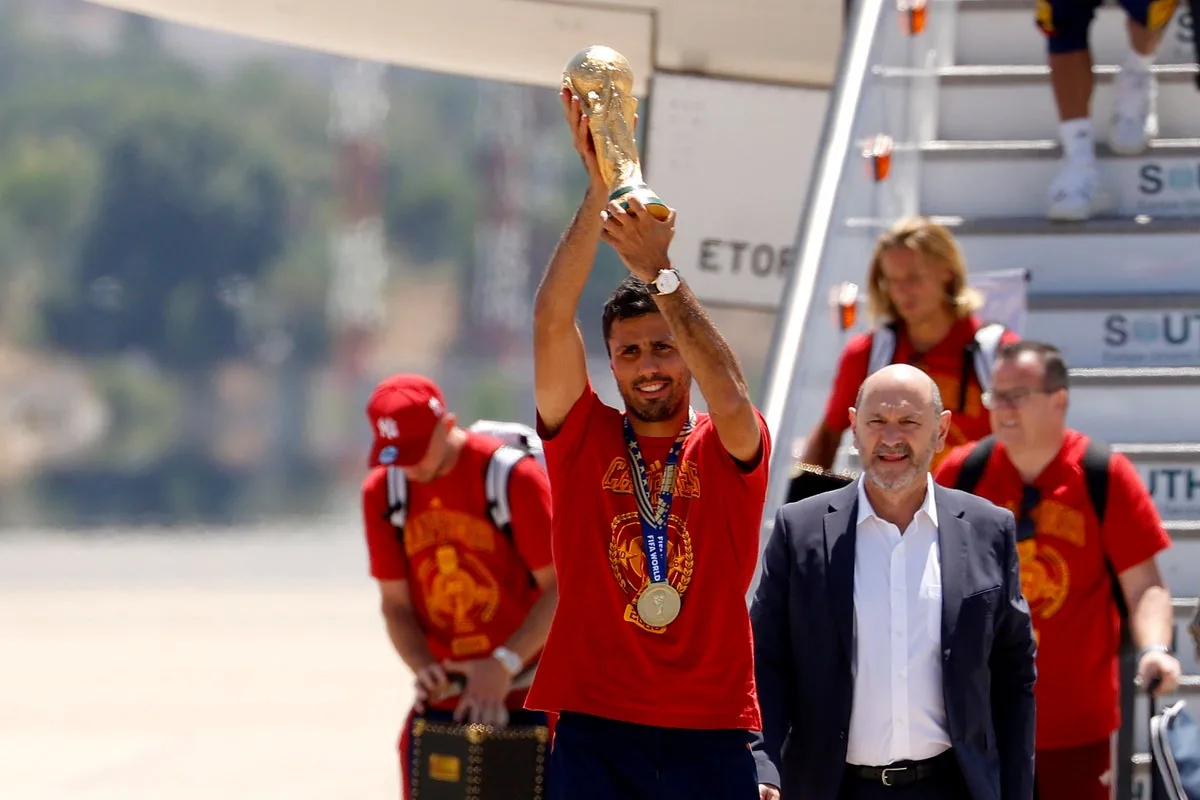
Spain‘s national football team has returned to Madrid to a celebratory welcome following their World Cup victory. The team’s triumph was secured by Ferran Torres‘ goal, marking their second men’s World Cup title. The squad arrived back in their home country for an elaborate trophy parade through the capital’s streets.
The parade was scheduled to commence at 7 pm local time, following the players’ arrival at Adolfo Suárez Madrid–Barajas Airport around 2:30 pm on Monday. Before the public celebrations, the players, coaching staff, and federation officials were taken to a secure location for lunch and a period of rest.
The victory was seen by many as a win for football, especially considering Argentina‘s performance in the final. The match itself was described as a challenging spectacle for 90 minutes before Torres made the decisive breakthrough in the second half of extra time.
Argentina’s Disgrace and FIFA Investigation
In stark contrast to Spain‘s celebrations, Argentina‘s team returned home amidst controversy and potential disciplinary action. The final match in New Jersey concluded with unsportsmanlike conduct from Argentina, leading to a FIFA investigation into the post-match events.
FIFA is expected to examine the incidents to determine if additional disciplinary measures are warranted. The governing body’s code allows for disciplinary action against a national team’s association if there is improper conduct, such as multiple individual disciplinary sanctions during a match. Actions that bring the sport or FIFA into disrepute could also lead to further penalties.
The match was particularly frustrating for Lionel Messi, who was denied a World Cup title in what was likely his final appearance in the tournament. The aftermath further soured the occasion for the 39-year-old football icon. The game saw Argentina‘s Enzo Fernandez receive a red card, and the team registered no shots on goal until the 117th minute.
Tournament Reaction and Viewing Figures
The World Cup final garnered significant viewership, with a peak audience of 15.8 million tuning in on BBC One and BBC iPlayer for Spain‘s victory over Argentina. The BBC captured a 64% share of all television viewing for the match, with an average of 13.9 million viewers watching as Ferran Torres secured Spain‘s second World Cup triumph.
Digital engagement was also high, with the final streamed 11.1 million times on BBC iPlayer and the BBC Sport website and app. This included 2.4 million UHD streams on iPlayer. The BBC Sport live text coverage saw over 18.8 million views, with 14.2 million of those in the UK.
Across the entire World Cup, the BBC reached an overall audience of 42.8 million through television viewing. World Cup matches were streamed 237 million times on BBC iPlayer and the BBC Sport website and app, more than double the figures from the 2022 World Cup. World Cup content accounted for 33% of all content streamed on BBC iPlayer during the competition.
The tournament also saw controversies off the field, including the presence of Donald Trump during the trophy presentation, despite efforts by Gianni Infantino to usher him away. Additionally, UEFA president Aleksander Ceferin reportedly boycotted the final in protest, partly due to discontent with FIFA.
The BBC Sport website and app attracted 57.2 million unique visitors, with content viewed 1.7 billion times. Match highlights were streamed 67.3 million times, and the new BBC Football YouTube channel generated 100 million views. Social media clips, interviews, analysis, press conferences, and fan moments accumulated 2.55 billion video views.
Read Also
- Argentina's Lisandro Martínez exits World Cup final early due to injury against Spain
- Argentina's World Cup title defense ends in defeat to Spain
- Rohit Sharma addresses retirement speculation after Lord's century
- Argentina could face disciplinary action after World Cup final brawl and semi-final banner
Source: independent.co.uk