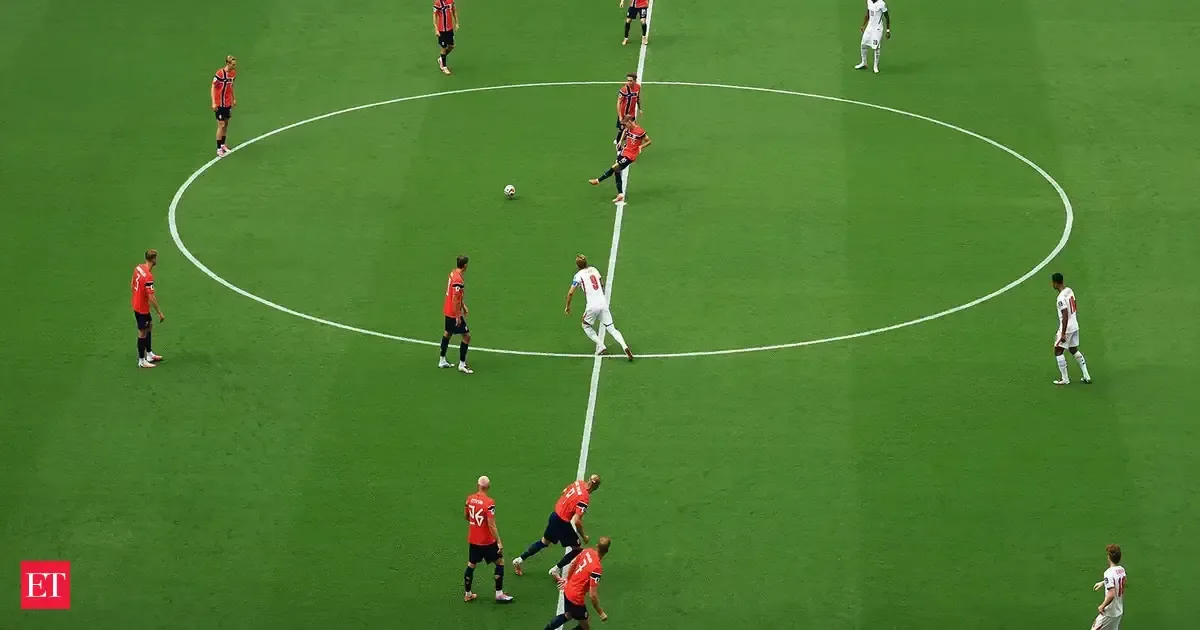
A recent FIFA World Cup quarter-final match between England and Norway led to a unique social media wager between airlines Norwegian Air and British Airways. Following England‘s 2-1 victory, Norwegian Air fulfilled its promise by changing its Instagram profile picture to the British Airways crest for 24 hours.
The light-hearted bet, made ahead of the July 11 quarter-final, stipulated that the airline representing the losing country would swap its Instagram profile picture with the winner’s logo. This public relations strategy, involving corporate sports wagers, has become a common approach for brands.
The Social Media Wager and Its Impact
The wager between the two airlines was based purely on pride, with no financial stakes or free flights involved. Both teams had made significant runs in the tournament, with Norway reaching its first-ever World Cup quarter-final. The bet quickly gained viral attention.
After England secured their 2-1 win, advancing to a semi-final match against Argentina in Atlanta, Norwegian Air promptly honoured the agreement. Their Instagram profile, typically featuring the red tail of a Norwegian 787, was updated to display the familiar British Airways crest and blue ribbon. The airline’s caption acknowledged the loss gracefully, stating, “While the tournament is over for us, this friendly bet will forever live in all our hearts.” They also extended well wishes to England and British Airways for the semi-final.
This zero-cost activation generated millions of impressions for both brands. Norwegian Air‘s willingness to embrace the loss publicly showcased a self-deprecating and human brand tone, which is considered rare for an airline. The airline reverted its logo after the 24-hour period, with no further penalties. British Airways, on the other hand, simply accepted the congratulations.
Broader Context of Brand Rivalries and Sports Wagers
The wager between Norwegian Air and British Airways holds additional significance given their historical rivalry. British Airways‘ parent company, IAG, had previously attempted to acquire Norwegian Air, even holding a 4.6% stake. Norwegian Air had also impacted transatlantic fares and, by 2018, had surpassed British Airways as the largest non-US airline on New York routes. This bet transformed their competition into engaging content.
The 2026 World Cup has seen significant interest from airlines, with the FIFA president noting “absolutely crazy” demand. A viral, no-cost marketing initiative during the knockout stage was considered opportune. The event also served as a reminder that effective marketing can sometimes involve gracefully acknowledging a loss, even amidst a tournament featuring extensive sponsorships.
Corporate sports wagers have been a part of public relations strategies for over a decade, offering high buzz with low stakes. Past examples include:
- 2013 Super Bowl: Budweiser vs MillerCoors
- 2014 World Cup: McDonald’s Brazil vs McDonald’s USA
- 2016 Euro: Icelandair vs British Airways
- 2018 World Cup: Aeromexico vs Lufthansa
- 2015 NBA Finals: Salesforce vs Oracle
- 2022 World Cup: Amazon vs Walmart
- 2019 Rugby World Cup: Tourism NZ vs Tourism Japan
- 2021 Euros: Visit Scotland vs Visit England
These historical examples often involved the losing party performing a public act of concession, such as a CEO wearing a rival’s jersey or an airline displaying a rival’s message. In the case of the 2014 World Cup, McDonald’s Brazil renamed a burger after the winning country for a month following their early exit.
Norway’s Historic World Cup Journey
For Norway, reaching the quarter-finals marked a significant achievement, as it was their first time advancing to the last eight in the tournament’s history. This was also their first return to the World Cup since 1998. Their previous best performances included Round of 16 finishes in 1938 and 1998, along with a group-stage appearance in the 1994 World Cup.
Following the match, Norway striker Erling Haaland was seen embracing England‘s match-winner Jude Bellingham, his former teammate. Haaland praised Bellingham as “one of the best in the world” and commented on Norway‘s impact, stating, “How we put Norway on the map… touches me the most. I think this changes Norway, I think it changes me.” The match was also attended by notable figures such as former England footballer David Beckham and tennis legend Venus Williams.
The final score of the quarter-final match was England 2-1 Norway.