
England has mounted a significant comeback in the decisive third Test against New Zealand at Trent Bridge, largely due to a century from Ben Duckett and an impactful bowling performance by captain Ben Stokes. After New Zealand reached 317 for no loss on the opening day, England managed to take all 10 wickets for 121 runs, dismissing the tourists for 438. By the close of the second day, England had reached 223 for two, trailing by 215 runs.
Stokes, returning to the side after missing the second Test, was instrumental in turning the tide with his bowling. In sweltering conditions, his eight overs yielded three wickets, breaking a 40-minute period without a breakthrough for England. Shoaib Bashir contributed with two wickets in an over, and Jofra Archer added one, also striking Blair Tickner, who was later ruled out of the match with concussion. New Zealand lost six wickets for 77 runs on Friday, having started the day at 361 for four.
Duckett’s century provides crucial momentum
Following England’s strong bowling effort, Ben Duckett capitalised on a dropped catch when he was on eight runs to score his first Test century since last June. His rapid 113 runs, supported by an unbeaten 74 from Jacob Bethell, propelled England’s innings. The second-wicket partnership between Duckett and Bethell added 179 runs, scoring at six runs an over. Duckett’s 88-ball century was his joint quickest, with only Zak Crawley achieving a faster ton as an England opener.
Duckett’s performance marked a personal turnaround after a challenging period, including going 14 innings without a Test half-century. He had opted out of the Indian Premier League to focus on red-ball cricket with Nottinghamshire, and his century on his home ground provided a significant moment of relief. He drove through the off side and employed various sweep shots, turning Trent Bridge into his “personal playground.”
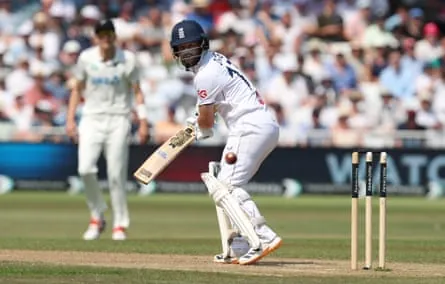
Despite the early loss of Emilio Gay for a duck, Duckett’s partnership with Bethell stabilised the innings. Bethell’s unbeaten 74 marked his first half-century at home and in the first innings of a Test. Joe Root, playing at a venue where he has often performed well, was 21 not out at stumps. New Zealand’s bowling attack was already hampered by the absences of Matt Henry and Kyle Jamieson, and the concussion to Blair Tickner further stretched their resources, leading to Zak Foulkes coming in as a concussion substitute.
Stokes’ leadership and bowling impact
Ben Stokes’ return to the team proved pivotal. His leadership and bowling were highlighted as crucial in the fightback. During his spell, Stokes enticed Will O’Rourke to miscue after the nightwatchman had frustrated England for 19 runs. He also dismissed Daryl Mitchell, who was initially convinced he had not edged the ball, but a review confirmed the dismissal.
A moment of controversy arose when Mitchell Santner was given out caught at gully off a short ball from Stokes. While Santner believed the ball hit his armguard, Stokes pointed to the strap of the batter’s glove, which is sufficient for a dismissal under the Laws of Cricket, and the third umpire agreed. Stokes finished with figures of 4-70. After Stokes withdrew himself at lunch, Archer and Bashir continued to take wickets, with Bashir holding a return catch off Smith and trapping Tom Blundell leg before wicket.
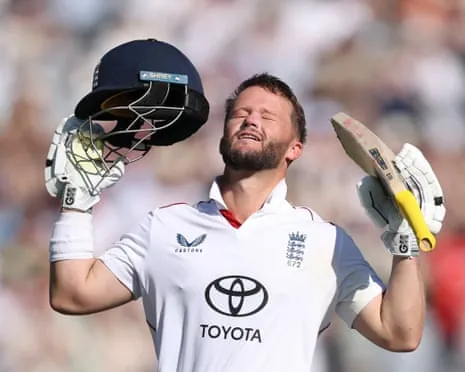
The resilience shown by England in this match has drawn comparisons to their memorable win in 2022 against the same opponents at the same ground, a match that is often credited with igniting their “Bazball” philosophy. Despite a challenging eight months for the team, including a run of two wins in nine matches, England’s ability to recover from a difficult position suggests a strong team spirit. They have a significant amount of work ahead with the bat to reduce the deficit further, but their performance on the second day has provided a platform to push for a victory.
The home side will resume their innings on the third day, aiming to build on the foundation laid by Duckett and Bethell.
Read Also
Source: bbc.com