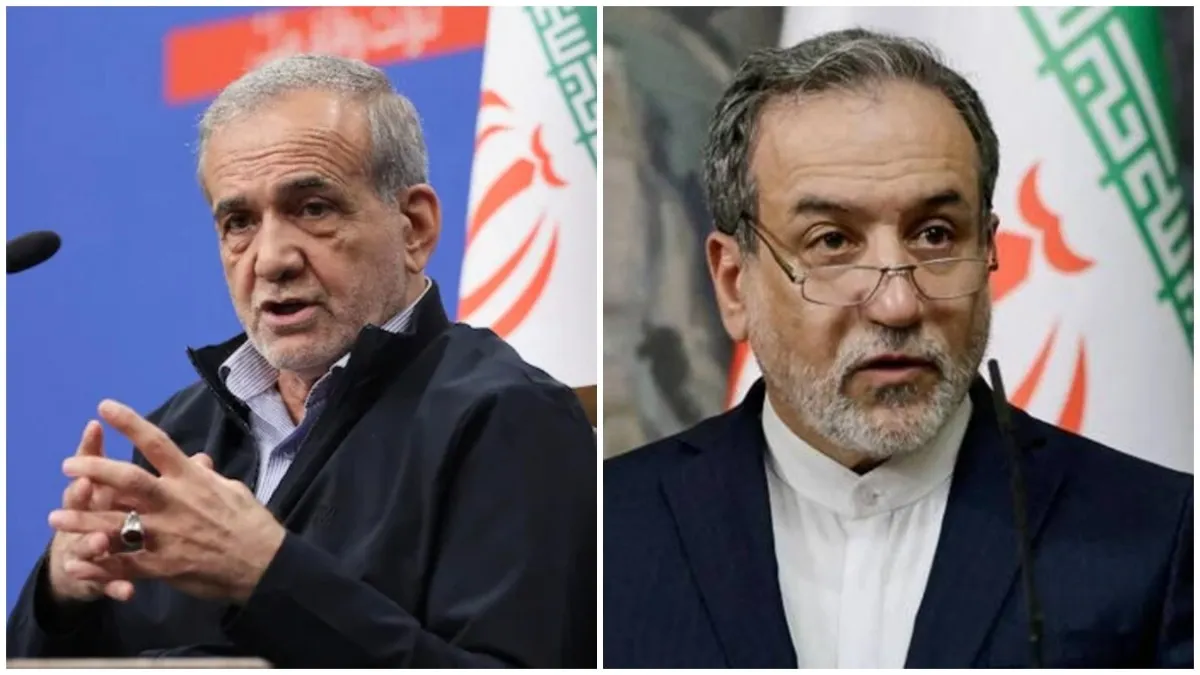
“Pezeshkian has told close associates that he will dismiss Araghchi if such conduct continues,” a source close to Iranian President Masoud Pezeshkian revealed, highlighting the growing tensions within Iran’s leadership. As of May 1, 2026, Foreign Minister Abbas Araghchi finds himself at the center of a political storm, facing increasing pressure to resign amid allegations that he has aligned too closely with the Revolutionary Guard.
The rift within Iran’s leadership has intensified over Araghchi’s handling of delicate Iran-US negotiations. President Pezeshkian and Parliament Speaker Mohammad Bagher Ghalibaf are reportedly spearheading efforts to oust him, accusing him of acting more like an aide to Revolutionary Guard Commander Ahmad Vahidi than a minister in charge of foreign affairs. This perception has undermined trust in Araghchi’s ability to navigate the complex landscape of international diplomacy.
Compounding the situation, Ghalibaf recently resigned from his position as head of the negotiating team after being reprimanded for including nuclear discussions in talks with American officials. The fallout from this incident has further highlighted the divisions within Iran’s leadership regarding their approach to negotiations.
Araghchi’s recent actions have not helped his case. He traveled alone to Islamabad on April 24 to deliver Tehran’s proposal directly to Pakistani officials, a move that did not sit well with Pezeshkian and other senior leaders who were left uninformed. The United States president subsequently rejected this proposal, deepening frustrations within Iranian ranks.
As tensions rise, a faction aligned with hardline politician Saeed Jalili has openly refused to support the negotiating team, signaling a significant split regarding Iran’s diplomatic strategy. Meanwhile, reports indicate that the Revolutionary Guards are consolidating control over key managerial positions—an indication of their growing influence amidst these turbulent times.
Still, Araghchi remains defiant. In a statement reflecting on international relations, he asserted that cooperation between Iran and Russia continues to expand amid regional uncertainty. “The United States failed to achieve its objectives in the recent conflict with Iran,” he remarked, underscoring his belief in Iran’s resilience despite ongoing pressures.
Key developments:
- Pezeshkian and Ghalibaf are leading efforts to dismiss Araghchi due to perceived alignment with the Revolutionary Guard.
- Araghchi coordinated directly with Ahmad Vahidi without informing President Pezeshkian.
- The U.S. rejected Tehran’s proposal delivered by Araghchi during his trip to Islamabad.
- A faction aligned with Saeed Jalili is refusing support for ongoing negotiations.
- The Revolutionary Guards are reportedly taking control of key positions in light of current political instability.
The landscape within Iran’s governance is rapidly changing. With internal divisions laid bare and critical negotiations at stake, how these power struggles will resolve remains uncertain as leaders prepare for an upcoming critical meeting scheduled for May 12 in Tehran.