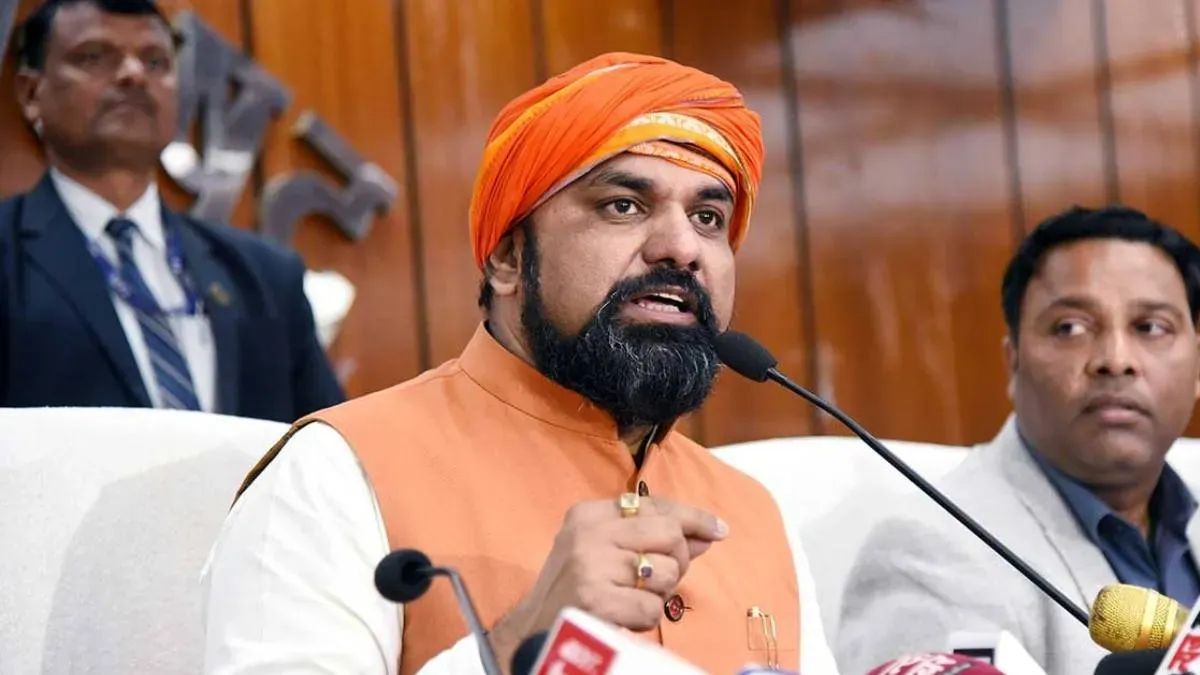
What does the resignation of Nitish Kumar mean for the political landscape of Bihar? It heralds a new era as Samrat Chaudhary is set to become the next Chief Minister of Bihar, marking a significant milestone as he will be the first Chief Minister from the Bharatiya Janata Party (BJP) in the state. This transition comes after Kumar’s remarkable two-decade tenure, which has shaped the state’s governance and political dynamics.
Chaudhary, who has been a stalwart in Bihar’s political arena for over three decades, previously served as the Deputy Chief Minister. His ascent to the Chief Ministerial position was facilitated by Deputy Chief Minister Vijay Sinha’s proposal and the endorsement of Union Minister Shivraj Singh Chouhan. This support underscores the BJP’s strategic maneuvering in Bihar’s complex political environment.
Born on November 16, 1968, Chaudhary hails from the Koeri-Kushwaha caste, which comprises approximately 4.2% of Bihar’s population. This demographic detail is crucial as it reflects the BJP’s efforts to consolidate support among various caste groups in the state. Chaudhary’s political journey began in earnest in 1999 when he was appointed as the Minister of Agriculture in the RJD-led government, marking his first significant breakthrough.
In 2018, Chaudhary joined the BJP, and by 2023, he had risen to the position of state president, guiding the party to a notable victory in the 2020 assembly elections, where the BJP secured 74 seats under his leadership. His commitment to the party and the state is evident in his statements, where he expressed gratitude for the opportunity to serve the people of Bihar. “This is not merely a position for me, but a sacred opportunity to serve the people of Bihar, to fulfil their trust and dreams,” Chaudhary remarked, emphasizing his dedication to the role.
As Chaudhary prepares for his oath-taking ceremony scheduled for April 15, 2026, the implications of his leadership are profound. He has pledged to uphold the expectations of the people with dedication and integrity, stating, “Together we will make Bihar prosperous and make the country developed.” His vision for Bihar reflects a commitment to progress and development, which resonates with the aspirations of many in the state.
The resignation of Nitish Kumar, who served as Chief Minister for an impressive 20 years, marks the end of an era. Kumar’s tenure has been characterized by significant political shifts, and his departure opens the door for new leadership dynamics. Chaudhary’s rise represents not just a personal achievement but a broader shift in Bihar’s political landscape, as the BJP seeks to solidify its influence in a region traditionally dominated by other parties.
As Bihar stands on the cusp of this political transition, the future remains uncertain. Will Chaudhary be able to navigate the challenges ahead and deliver on his promises? The coming months will reveal whether his leadership can bring about the change that many in Bihar are hoping for. With the political landscape in flux, all eyes will be on Chaudhary as he embarks on this new chapter in Bihar’s governance.