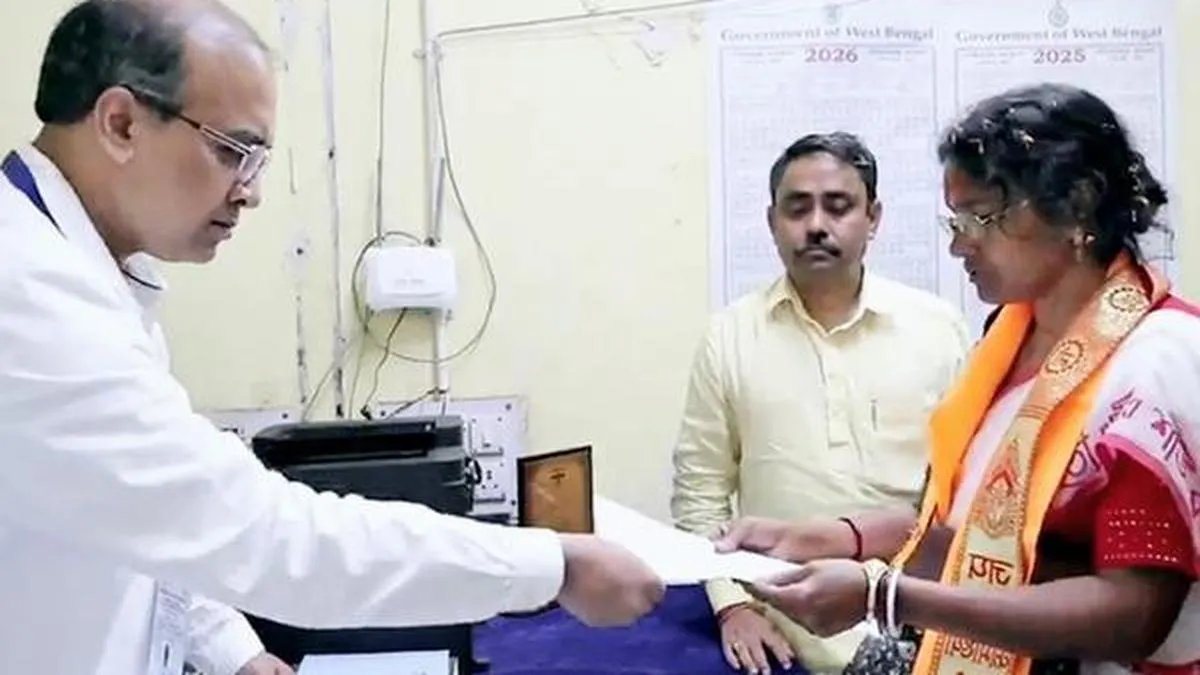
“This victory is the victory of the people of Panihati, of the entire Bengal,” declared Ratna Debnath after her stunning electoral win on May 4, 2026. The mother of a murder victim, she has emerged as a beacon of change in West Bengal’s volatile political landscape.
Debnath clinched the Panihati Assembly constituency as a candidate for the BJP, defeating Tirthankar Ghosh from the TMC by an impressive margin of 28,836 votes. She garnered 87,977 votes, while Ghosh trailed with 59,141 votes. Kalatan Dasgupta from the CPI(M) secured third place with 24,032 votes.
This victory is not merely about numbers; it encapsulates a profound narrative that began with tragedy. The brutal rape and murder of her daughter at RG Kar Medical College in August 2024 ignited outrage across the state. It was this personal loss that propelled Debnath into the political arena, advocating fiercely for women’s safety and accountability in governance.
The backdrop of this election was charged with tension. The BJP achieved a historic milestone by securing over two-thirds of the seats in West Bengal’s Assembly—totaling 202 seats. This shift marks a turning point in a region long dominated by the TMC.
As she celebrated her victory, Debnath dedicated her achievement to Prime Minister Modi. “I could not have done this alone,” she humbly acknowledged, recognizing the collective effort behind her campaign.
The implications of this election extend beyond individual success; they signal a potential reconfiguration of power dynamics within West Bengal. With women’s safety as a central theme of her platform, Debnath’s rise could influence future policies and priorities within the state government.
The next steps for Debnath involve establishing herself within the assembly and translating her campaign promises into actionable policies. Her journey is just beginning, but it resonates deeply with those who have suffered similar losses and seek justice.