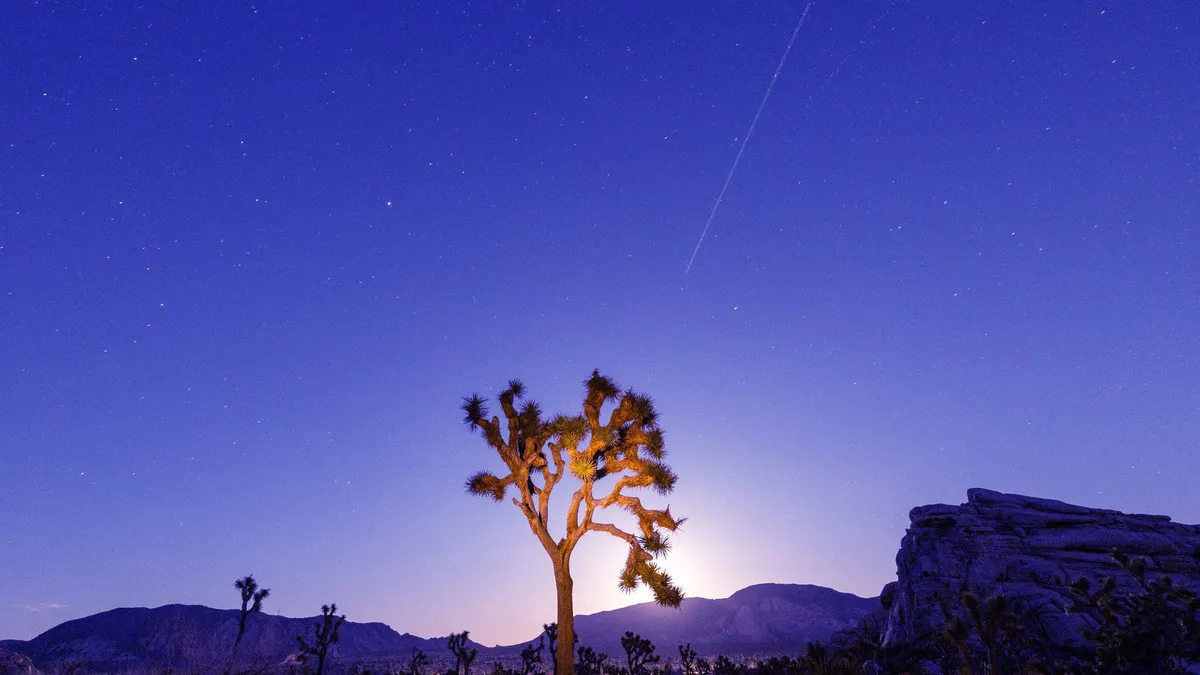
The night sky will soon be alive with the brilliance of the Lyrid meteor shower, peaking from April 21 to April 22. This ancient celestial event, first recorded over 2,700 years ago, offers a breathtaking spectacle for those fortunate enough to gaze upward. The meteors, known for their speed and brightness, can leave glowing trails that linger in the dark—a reminder of the universe’s wonders.
Observers in the Northern Hemisphere can expect to see as many as 15 to 20 meteors per hour under optimal conditions—clear skies and minimal light pollution. The best viewing time? After midnight, when the radiant point near the constellation Lyra rises higher in the sky, illuminating the vast expanse above.
The origins of these meteors trace back to Comet C/1861 G1 Thatcher. As Earth passes through the debris left behind by this comet each spring, tiny particles enter our atmosphere at astonishing speeds. When they collide with air molecules, they create streaks of light that captivate onlookers—an annual reminder of our cosmic connection.
But these meteors are not merely a modern phenomenon; they have been observed since at least 687 BC. The Lyrids are among the oldest recorded meteor showers in history, providing a link between ancient civilizations and contemporary stargazers. Each flash across the sky is a whisper from the past—a moment suspended in time.
The meteors appear to originate close to their brightest star, Vega, which adds a layer of intrigue for those familiar with the constellation Lyra. As you stand beneath this celestial canopy, consider how many generations have looked up in awe at this same sight.
For those planning to witness this year’s display, remember: it takes about 30 minutes for your eyes to adjust to darkness for optimal viewing. So find a quiet spot away from city lights—perhaps a local park or an open field—and prepare for an enchanting night.
With maximum visibility reaching up to 100 meteors per hour under ideal conditions, this year’s Lyrid meteor shower promises excitement. However, details remain unconfirmed regarding any unusual activity that might accompany this year’s event.