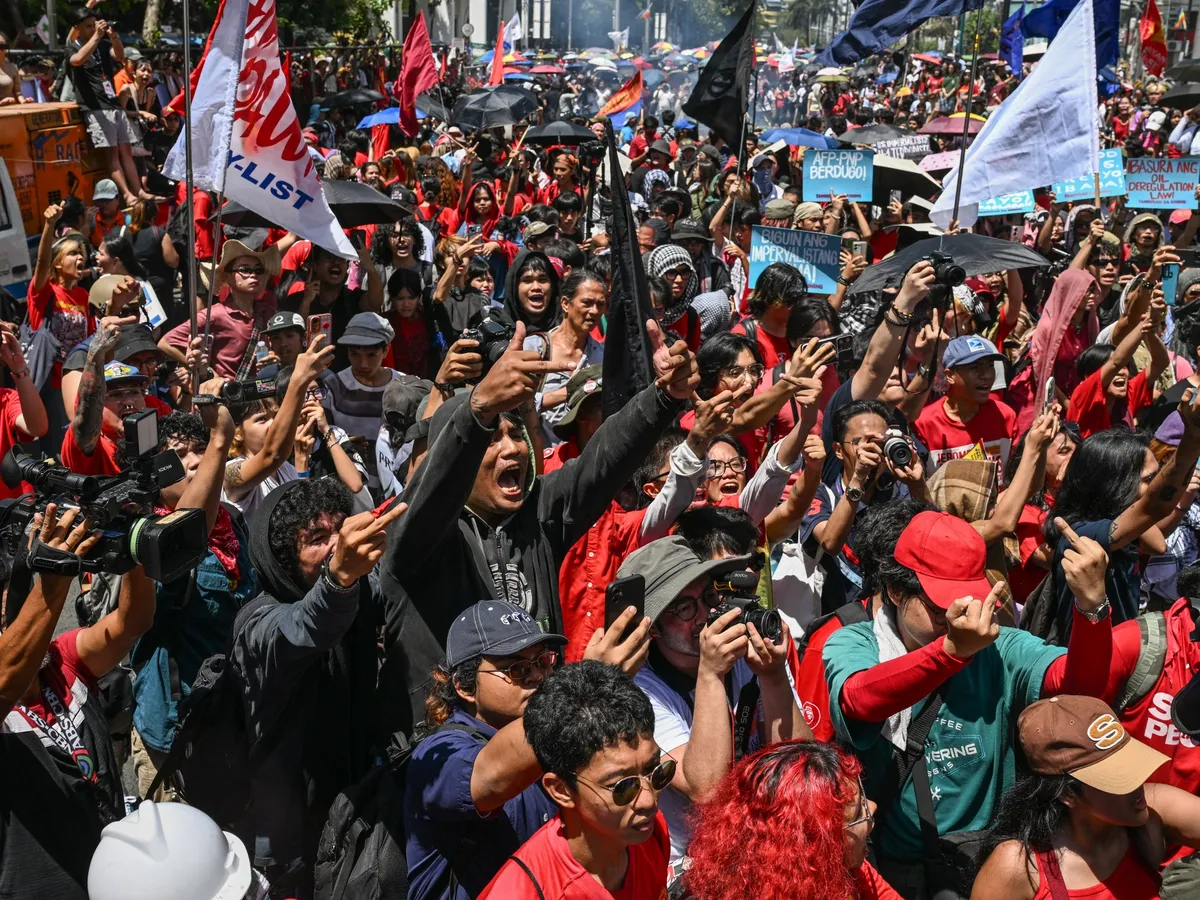
As Labour Day approaches, protests are set to unfold across the USA under the powerful slogan ‘workers over billionaires.’ Despite not being a public holiday, these demonstrations aim to spotlight the urgent need for workers’ rights amidst growing income inequality and fears of a global recession.
The roots of this movement stretch back to the historic protests of 1886 in Chicago, where workers rallied for an eight-hour workday. Fast forward to today, and the echoes of that struggle resonate as coalitions advocate for higher taxes on the wealthy and better labour protections. The theme for this year’s Labour Day is ‘Ensuring a Healthy Psychosocial Work Environment.’ This reflects a growing awareness of how workplace conditions affect mental health and overall well-being.
The May Day Strong group is leading the charge in the USA, calling for organized actions that align with similar global rallies. They emphasize that working people refuse to bear the brunt of economic policies that favor billionaires. As stated by the European Trade Union Confederation, “Working people refuse to pay the price for Donald Trump’s war in the Middle East.”
Statistics paint a stark picture: around 550,000 workers in Gaza and the West Bank currently have no income due to an ongoing economic crisis. This reality underscores the interconnectedness of labor struggles worldwide. As Josua Mata points out, “Every Filipino worker now is aware that the situation here is deeply connected to the global crisis.”
Key facts surrounding Labour Day protests include:
- The Haymarket incident of May 4, 1886, significantly strengthened international workers’ rights movements.
- Around 93 trade union organizations are represented by the European Trade Union Confederation across 41 countries.
- The unprecedented spikes in fuel prices have prompted louder calls for higher wages and economic relief.
This year’s protests come at a time when many feel increasingly disillusioned with economic disparities. Activists argue that rising income inequality is not just a local issue but part of a broader global pattern exacerbated by systemic injustices. Renato Reyes articulates this sentiment: “There will be a louder call for higher wages and economic relief because of the unprecedented spikes in fuel prices.”
As Labour Day draws near, uncertainty lingers over how these protests will unfold and what impact they might have on policy discussions. While some officials remain optimistic about potential reforms in labor laws, no definitive timeline has been shared regarding any forthcoming changes. The collective voices demanding respect for labour—safe workplaces, healthy minds—reflect a deep desire for dignity in work; as A.K Srivastava asserts, “Respect for labour, safe workers, healthy minds, and dignified workplaces—this is the true identity of a strong nation.”