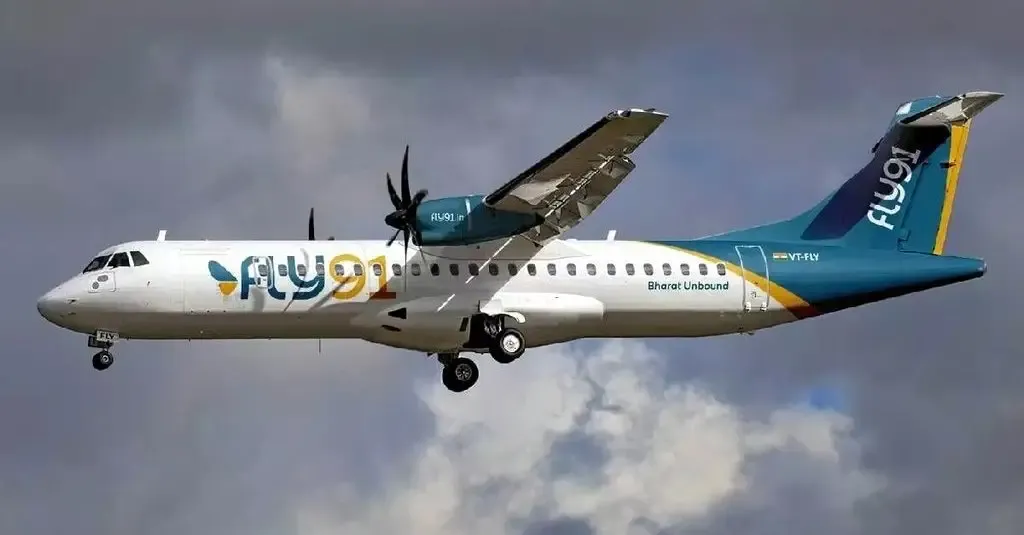
What happens when a flight is diverted due to severe weather? For the 22 passengers aboard Fly91’s flight from Hyderabad to Hubballi on April 19, 2026, the answer involved unexpected turbulence and a detour to Bengaluru.
The aircraft took off from Hyderabad at 3:30 PM, scheduled to land in Hubballi by 4:30 PM. However, as the plane approached its destination, conditions worsened. The aircraft circled Hubballi for nearly an hour—an anxious wait for the passengers on board—before it was finally redirected to Bengaluru, landing safely at around 6:30 PM.
All passengers were reported safe following the diversion, though many experienced panic during the turbulent flight. A video capturing their distress circulated widely on social media, underscoring the emotional weight of such incidents. Yet Fly91 reassured everyone: “There was zero compromise to safety.” An airport official confirmed that the diversion was a necessary decision due to adverse weather conditions.
Fly91 emphasized that this procedure is standard during poor visibility or unstable weather—prioritizing passenger safety over strict adherence to schedule. Reports suggesting a technical fault with the aircraft were labeled as false and baseless by the airline.
After deplaning in Bengaluru, 18 of the original passengers continued their journey back to Hubballi on a later flight at approximately 11 PM. The day was marked by similar weather-related disruptions across the region, adding further context to this incident.
As travelers reflect on their experiences in moments of uncertainty like these, questions linger about how airlines will navigate increasingly unpredictable weather patterns in the future. While this incident ended without injury, it serves as a reminder of aviation’s inherent risks and the importance of safety protocols in mitigating them.