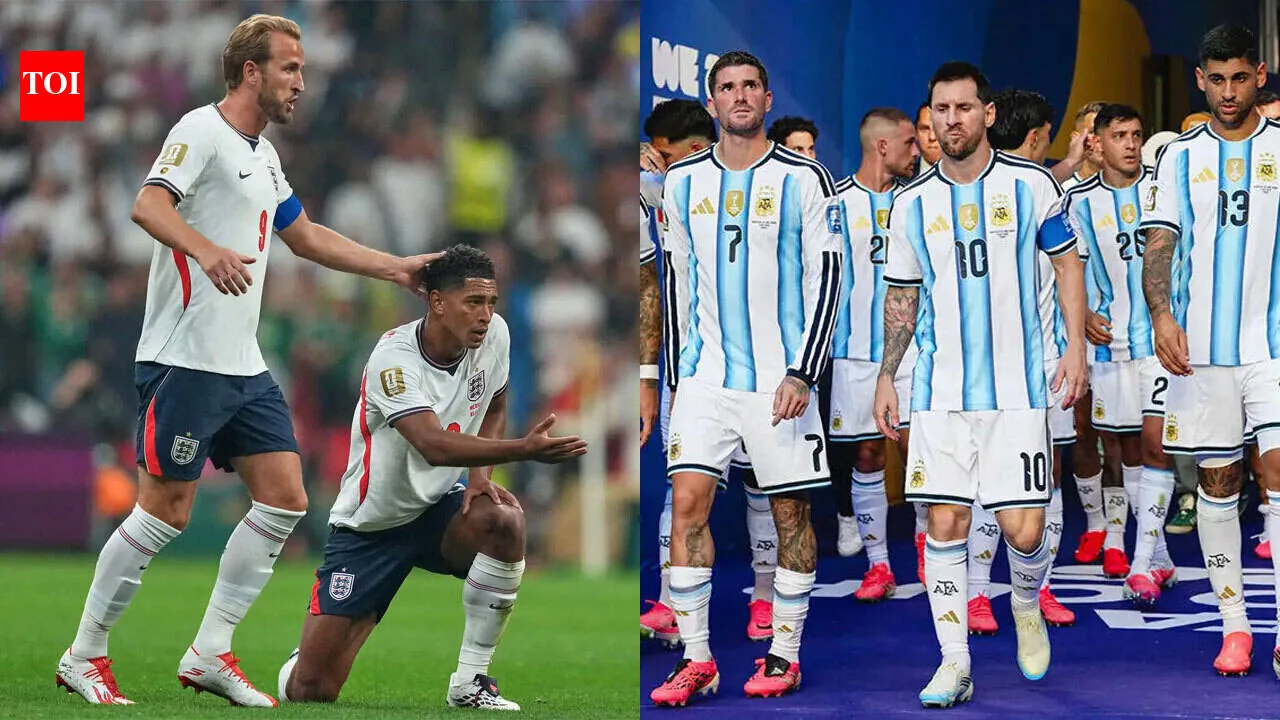
The upcoming semi-final match between England and Argentina in Atlanta on Wednesday night has been designated as a high-risk event by the FBI, underscoring the intense and long-standing rivalry between the two national teams.
This rivalry has deep roots, extending beyond recent football encounters to historical events. Forty years ago, in the Mexico ’86 World Cup quarter-final at the Azteca Stadium, Argentina secured a 2-1 victory over England. During this match, Diego Maradona scored Argentina’s first goal by using his hand to direct the ball past England goalkeeper Peter Shilton. Despite protests from the England team, the referee allowed the goal, claiming he did not witness the handball. Maradona later referred to this goal as the “hand of God.” Minutes after this controversial goal, Maradona scored what many consider the greatest World Cup goal of all time. Argentina ultimately went on to win the World Cup that year.
Maradona, in his autobiography, admitted to using his hand for the first goal, stating it was a form of symbolic revenge against the English following the 1982 Falklands War. This conflict resulted in the deaths of 649 Argentinians and 255 British troops. Among the Argentinian casualties, 323 were aboard the ARA Belgrano, an Argentine naval ship, which was sunk under the authorisation of then-UK Prime Minister Margaret Thatcher. Maradona expressed his desire to honour the memory of those who died and to “wipe England off the world map – the world football map, that is.”
The sentiment surrounding the Falklands War continues to resonate within Argentinian football culture. Diego Sinagara, Maradona’s son, encouraged fans to remember the deceased, telling the Spanish newspaper Marca that for Argentinians and Maradona fans, the match would be distinct, bringing to mind the Malvinas (Falklands War) and those who perished. Recently, the Argentina national football team released a video showing players celebrating with their World Cup fan anthem, “La Cuarta Estrella,” which includes lyrics referencing the Malvinas and Diego Maradona.
The term “Las Malvinas” is the Argentinian name for the Falkland Islands. This week, Argentina’s foreign minister, Pablo Quirrno, described Falkland Islanders as an “artificially implanted” population in an essay published in the Argentinian newspaper La Nacion. He called for Britain to engage in talks to transfer the territory and claimed the 2013 referendum was illegitimate. In response, the UK Prime Minister’s official spokesman stated that Falkland Islanders are British and have the right to self-determination, reiterating the UK’s clear position that the islanders have consistently expressed their wish to remain a British overseas territory.
Historical Rivalry on the Pitch
The animosity between the two nations on the football pitch predates the Falklands War. During the 1966 World Cup quarter-final at Wembley, Argentinian players were noted for their aggressive tactics, including violent tackles, spitting, hair-pulling, and intimidation. England manager Alf Ramsey famously labelled them “animals.” Argentina captain Antonio Rattin, who passed away recently, was sent off for dissent after arguing with the referee, requiring police intervention to remove him from the pitch.
Another notable encounter occurred at France ’98, where David Beckham received a red card for kicking Argentina midfielder Diego Simeone. Simeone later admitted to provoking the England midfielder. England ultimately lost that match on penalties. Former Argentinian captain Roberto Perfumo told the Guardian in 2002 that “English players are more naive. We look for ways to destroy him.”
Despite the strong anti-English sentiment often associated with Argentinian football culture, football itself was introduced to Argentina in 1867 by the Hogg brothers, who were Englishmen from Skelton, Yorkshire.
Anticipation for the Semi-Final
As Wednesday’s semi-final approaches, pubs across Britain are preparing for what is anticipated to be a major night, with flags already displayed. England fans are reportedly confident in their team’s ability to win and view the match as an opportunity for revenge for Maradona’s “Hand of God” goal.
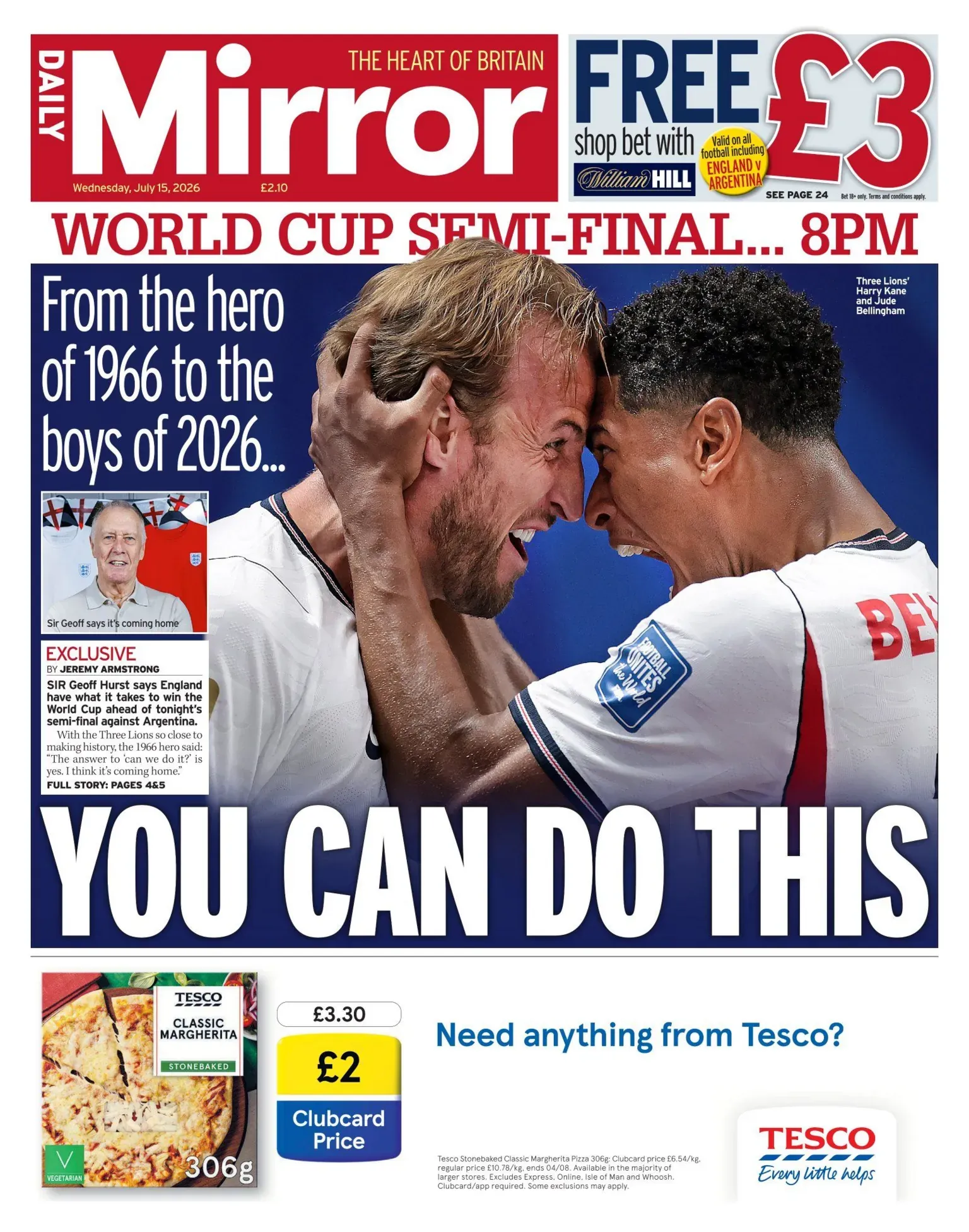
Newspaper headlines reflect the high anticipation for the match. The Daily Express urged its readers to “Roar On” Thomas Tuchel’s men. The Daily Mirror declared, “You can do this,” while The Sun described the team as “Harry Kane’s brave band of heroes” and called on them to “bring it home.” Millions across the UK are expected to tune in for the showdown, scheduled for 20:00 BST on Wednesday.
The match is set to take place in Atlanta on Wednesday night.
Read Also
Source: timesofindia.indiatimes.com