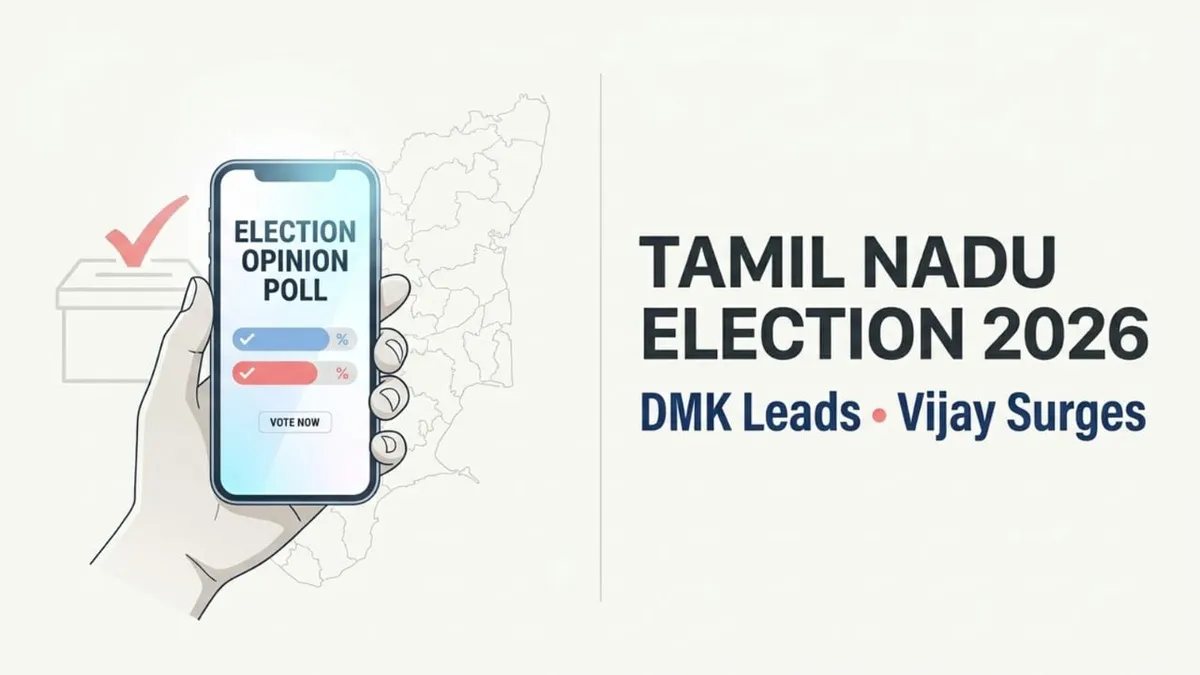
As dawn breaks over Tamil Nadu on an ordinary day in early April 2026, the atmosphere is charged with anticipation. The streets of Chennai buzz with conversations about the impending assembly elections, scheduled for April 18. In a state known for its vibrant political culture, this election promises to be particularly riveting—especially in light of the recent Vikatan election survey that has set the stage for a dramatic showdown.
On March 15, just weeks before the polls, the Vikatan survey results were released. They painted a complex picture: while the Dravida Munnetra Kazhagam (DMK) is projected to retain power, securing around 121 seats in the 234-member assembly, there’s an undercurrent of discontent among voters. A striking 62% of respondents expressed a desire for regime change—a clear signal that not all is well in the ruling party’s camp.
The DMK’s governance model—predicated on welfare initiatives and a stable leadership image—has served them well thus far. Yet, as M. K. Stalin prepares for another electoral battle, he must reckon with emerging challengers that threaten to disrupt his party’s dominance. Chief among these is Vijay’s Tamilaga Vettri Kazhagam (TVK), which has captivated a segment of the electorate and is projected to secure three seats. Its entry has significantly altered the electoral dynamics; many are curious whether it can siphon enough votes from established parties.
In stark contrast stands Edappadi K. Palaniswami’s AIADMK alliance, which faces an uphill battle with projections suggesting it will secure only 83 seats. The AIADMK’s traditional stronghold appears vulnerable as more voters express dissatisfaction with their leadership and policies. The numbers tell a compelling story: with over 5.67 crore voters in Tamil Nadu and about 12.5 lakh first-time voters eager to make their voices heard, every vote will count.
Yet, despite the desire for change among a significant portion of the electorate, analysts suggest that the DMK’s organizational strength and vote consolidation efforts over recent years may insulate it from immediate threats. The party continues to leverage its past successes—particularly in welfare schemes—to garner support from those who prioritize stability over uncertainty.
The survey encompassed responses from 93,600 voters across all constituencies—a testament to its thoroughness and reliability. As voters prepare to cast their ballots, they carry with them not just their hopes for better governance but also a palpable sense of unease about what lies ahead in Tamil Nadu’s political landscape.
Details remain unconfirmed regarding how these sentiments will translate at the ballot box; however, one thing is clear: Tamil Nadu’s electoral politics is entering a new phase where clear majorities can no longer be taken for granted. The stakes are high as candidates gear up for what could be a pivotal moment in shaping the state’s future.