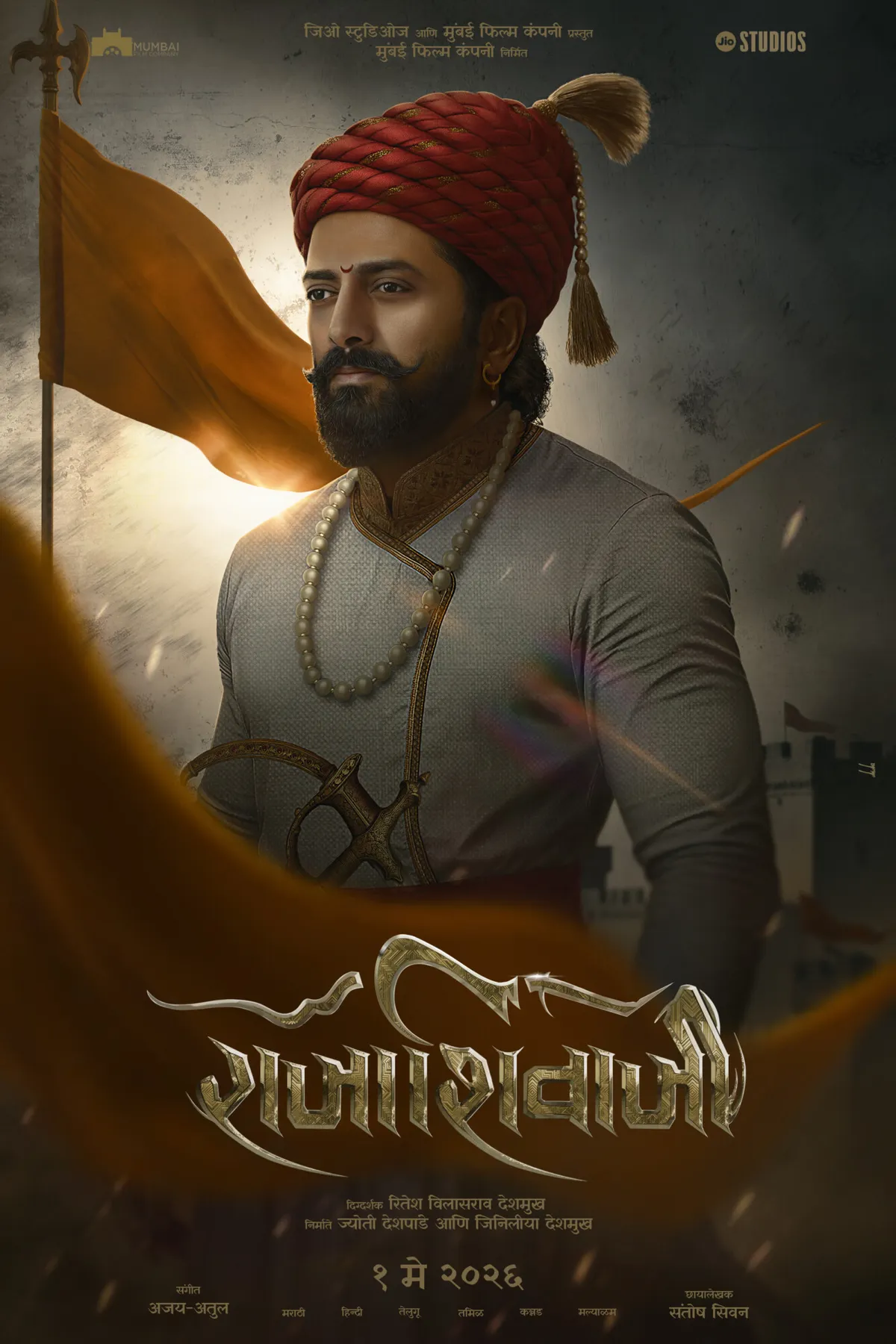
In a bold cinematic endeavor, Raja Shivaji brings to life the storied past of Chhatrapati Shivaji Maharaj, the revered Maratha king. Set against the backdrop of mid-seventeenth century Maharashtra, the film intricately weaves themes of nationalism and religious identity as it chronicles Shivaji’s evolution from Shivaji Shahaji Bhonsle to a formidable ruler.
The narrative unfolds with a vivid portrayal of Shivaji’s early struggles, highlighting his quest for Hindavi Swaraj—a vision for self-rule that resonated deeply within the Maratha Empire. As tensions rise, his primary adversary emerges: Afzal Khan, played by Sanjay Dutt, whose menacing presence threatens to overshadow Shivaji’s ambitions.
Directed by Riteish Deshmukh, who also co-wrote the screenplay alongside Jaideep Yadav and Prajakt Deshmukh, the film features an impressive runtime of 195 minutes. This ambitious project showcases a blend of Marathi and Hindi dialogue, making it accessible to a broader audience while maintaining its cultural roots.
The film’s cinematography, helmed by Santosh Sivan, captures the lush landscapes and intense battle sequences that define this epic saga. Audiences are treated to stirring musical compositions by Ajay-Atul, which elevate key moments throughout the film.
Despite its grand aspirations, reviews have been mixed. Critics note that while “Raja Shivaji isn’t perfect,” it successfully tells the tale of its titular character. However, some found the pacing sluggish in parts; one review remarked on how “the first half is so unimpressive and slow that I was ready to fall asleep in an instant.”
Notably, the film features Bollywood cameos that add star power—Salman Khan appears as Jeeva Mahala, injecting excitement into pivotal scenes. Vidya Balan portrays Khadija, wife of Adil Shah, adding depth to the narrative through her character’s struggles amid political turmoil.
The Bombay High Court recently dismissed a petition claiming that the title ‘Raja Shivaji’ was derogatory—a testament to the film’s cultural significance and its potential impact on Maharashtra’s historical discourse. As audiences flock to theaters to witness this portrayal of their heritage, one thing remains clear: this film is not just entertainment; it is a celebration of Maratha pride.