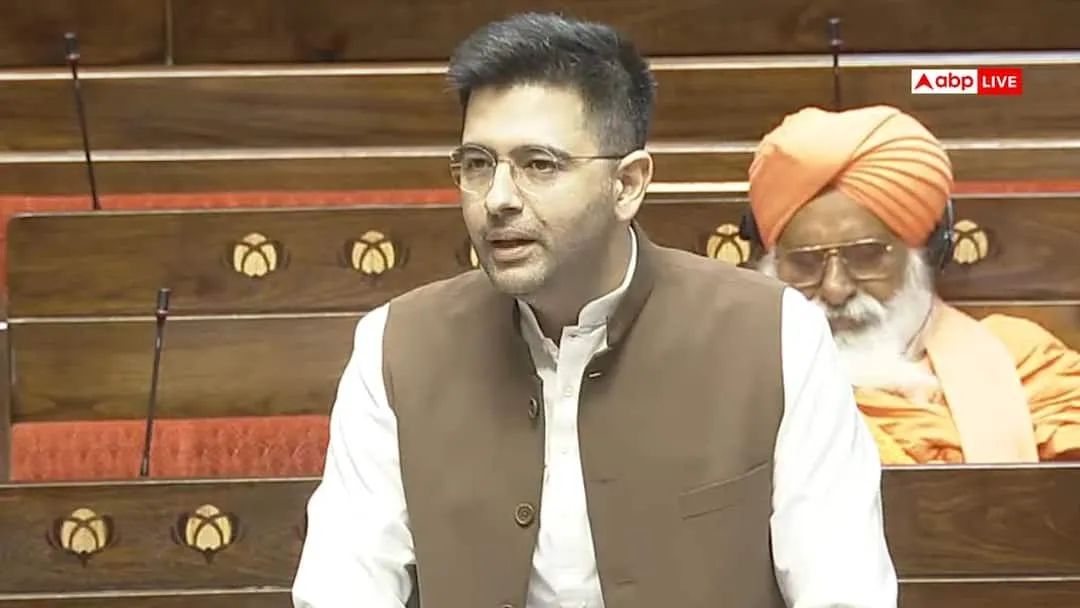
In the hallowed halls of the Rajya Sabha, where echoes of political discourse intertwine with the weight of history, Raghav Chadha stood before his peers, a prominent member of the Aam Aadmi Party (AAP). The air was charged with anticipation as the election for the new Deputy Chairman unfolded. It was a moment marked not only by procedural formality but also by personal sentiment.
On April 17, 2026, Harivansh was elected unopposed for his third term as Deputy Chairman—a position that carries both prestige and responsibility. As a seasoned politician, he has navigated the complexities of Indian governance with a steady hand. Yet, amidst this celebration, Chadha’s words resonated with an undertone of complexity.
“I congratulate Harivansh ji on his third term as Deputy Chairman,” Chadha declared, his voice steady but layered with meaning. The applause that followed was not just for Harivansh’s achievement but also for the acknowledgment of their shared journey in politics.
However, it was in his subsequent remarks that the emotional tapestry began to unravel. “My personal relationship with Harivansh ji has been a bit bittersweet,” he confessed, revealing a depth that transcended mere political rivalry. In that moment, he encapsulated the essence of their interactions—marked by both camaraderie and contention.
Chadha’s call for additional time to speak after the bell rang—a request often made in such forums—was not merely procedural. “If you could give us a couple of extra minutes after the bell rings, we could present our points more strongly,” he urged, hinting at an eagerness to engage more deeply with pressing issues.
This request underscored a desire for dialogue that is often overshadowed by formalities. It reflected a commitment to ensuring that voices within the chamber are heard fully, even when personal dynamics complicate matters.
The Rajya Sabha session continued, but observers noted that Chadha’s remarks were emblematic of broader political currents—shifts within parties and evolving relationships among leaders. The complexities of governance often play out against a backdrop of personal history.
As discussions progressed, many wondered what this bittersweet dynamic would mean for future collaborations between AAP and other parties. Would this acknowledgment lead to greater unity or further division? Only time will tell.
For now, Raghav Chadha’s words linger in the minds of those present—an intricate blend of respect and rivalry that continues to define political landscapes across India.