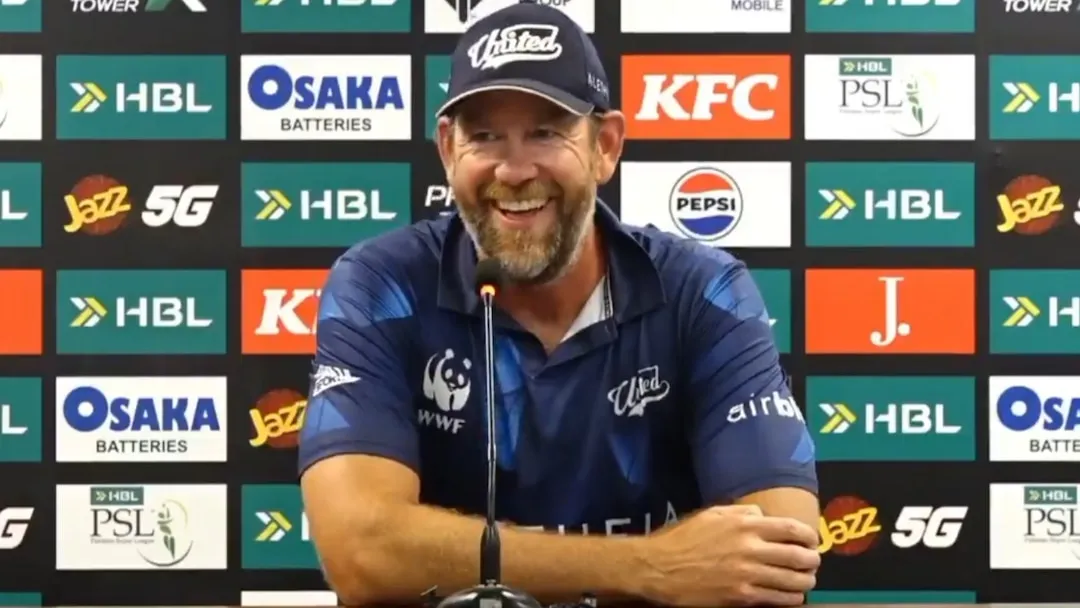
The IPL vs PSL debate has been a recurring topic during the PSL 2026 season, igniting discussions among players, fans, and analysts alike. The Indian Premier League (IPL), known for its glitz and glamour, has often been contrasted with the Pakistan Super League (PSL), which, despite its shorter format, has garnered a passionate following. This year, the conversation took a humorous turn when Rilee Rossouw, a prominent player in the PSL, made a lighthearted comment suggesting that the IPL feels “more like a movie than actual cricket.”
Jacob Oram, the former New Zealand all-rounder and current assistant coach for Islamabad United, couldn’t help but chuckle at Rossouw’s remark. “Did you say like a movie?” he quipped, showcasing his sense of humor amidst the ongoing debate. Oram, who has played in the IPL but has not taken on a coaching role there, provided a unique perspective on the matter, emphasizing the significant growth of the IPL over the years.
Reflecting on his experiences, Oram stated, “I haven’t coached in the IPL. I played in the IPL and that was a long time ago and it has grown into a bit of a behemoth.” His words resonate with many who have witnessed the IPL’s evolution into a cricketing juggernaut, attracting top talent from around the globe and transforming the landscape of T20 cricket.
Currently, Oram is immersed in his role with Islamabad United, where he expressed his enjoyment, saying, “This is my first opportunity in the PSL and I’m loving it.” His enthusiasm for coaching in the PSL is palpable, especially as he navigates the challenges of the season, which is being held without spectators due to a spike in oil prices. Oram’s commitment to his team remains unwavering, as he aims to guide them through the competition.
As the PSL 2026 unfolds, Islamabad United has had a mixed bag of results, with three wins, two defeats, and one match washed out. The team recently faced a setback against the Hyderabad Kingsmen, who defeated them by six wickets, a reminder of the fierce competition that characterizes the league. Oram’s insights into the differences between the IPL and PSL are particularly relevant as fans analyze the contrasting styles of play and the overall atmosphere of each tournament.
Oram also noted the structural differences between the two leagues, pointing out that the IPL is twice as long as the PSL. This distinction plays a significant role in how teams strategize and players manage their fitness and performance over the course of the tournaments. Despite the challenges, Oram remains optimistic about the PSL’s potential and its ability to showcase cricketing talent.
Looking ahead, Oram expressed a desire for crowds to return to the stadiums, stating, “I’d love to have crowds here for that vibe and atmosphere.” The absence of fans has undoubtedly altered the dynamics of the matches, and the excitement of live spectators is something that both players and coaches are eager to experience once again. As the PSL continues, the dialogue surrounding the IPL vs PSL comparison is likely to persist, fueled by the passion of cricket enthusiasts and the evolving narratives of both leagues.