As the sun sets over the bustling streets of New Delhi, the political landscape is charged with anticipation. On April 14, 2026, the Union Government proposed a significant amendment to the structure of the Lok Sabha, India’s lower house of Parliament. This proposal, which seeks to increase the strength of the Lok Sabha from its current 543 members to a staggering 850, marks a pivotal moment in the country’s democratic evolution.
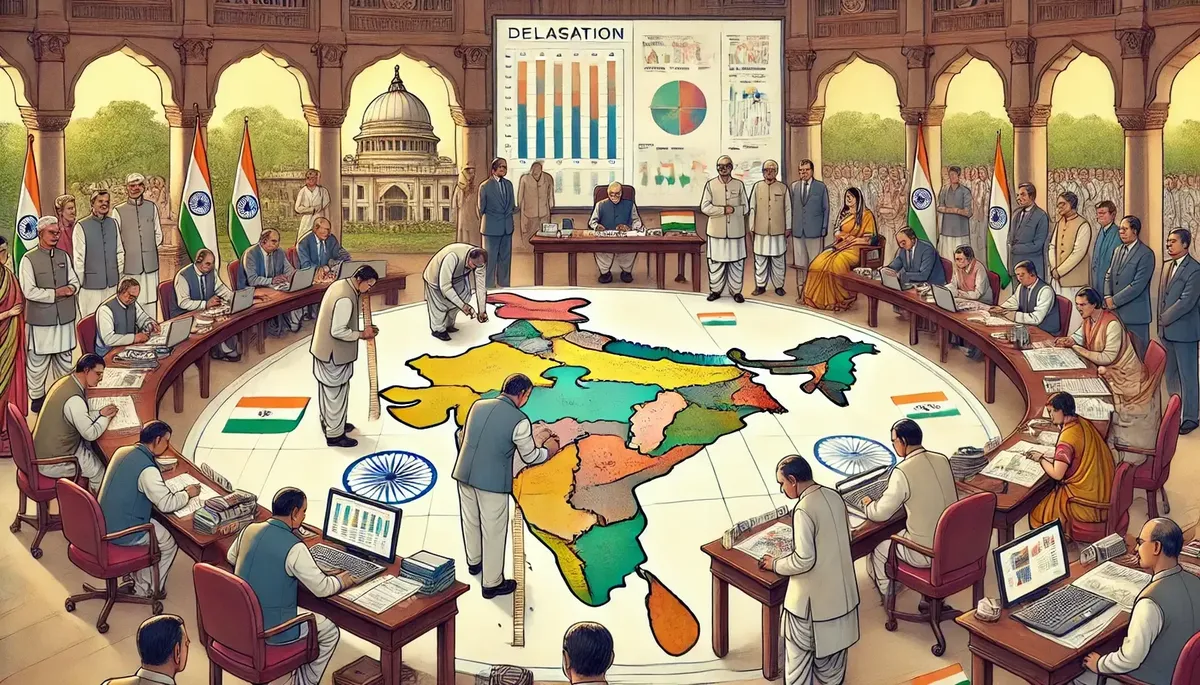
The proposed amendment is not merely a numerical adjustment; it aims to delete the longstanding requirement that delimitation must follow the post-2026 Census. This shift is crucial, as it allows for a reconfiguration of parliamentary constituencies without waiting for the next census, which is expected to conclude in 2027. The implications of this change are profound, as the current constituency boundaries have been frozen since the 84th Amendment Act of 2001, which was based on the 1971 Census.
On April 16 and 17, the Bill will be taken up during a Special Session of Parliament, where lawmakers will deliberate on its provisions. Among the most notable aspects of the Bill is the proposal to amend Article 82 of the Constitution, which governs the readjustment of parliamentary constituencies following each census. This amendment is expected to empower the Central Government to constitute a Delimitation Commission, which will play a critical role in redrawing the boundaries of constituencies.
The Delimitation Commission will be chaired by a distinguished individual—a person who is or has been a Judge of the Supreme Court. This ensures that the process of delimitation is conducted with the utmost integrity and legal oversight. Furthermore, the Bill proposes an amendment to Article 81, allowing for a maximum of 815 members from the states and 35 from Union Territories, thereby reflecting a more equitable representation of India’s diverse population.
In a landmark move towards gender equality, the Bill also includes a provision for 33% reservation for women in the Lok Sabha and State Assemblies. This is a significant step forward in addressing the gender imbalance in Indian politics, where women’s representation has historically lagged behind. The inclusion of such a provision underscores the government’s commitment to fostering an inclusive political environment.
Currently, the composition of the Lok Sabha is based on the 1971 Census, a fact that has led to calls for reform as population dynamics have shifted dramatically over the decades. The latest published census data, from 2011, has further highlighted the discrepancies in representation, making the case for immediate action even more compelling. The proposed changes aim to rectify these imbalances and ensure that the Lok Sabha reflects the current demographic realities of the nation.
As the political machinery gears up for the upcoming sessions, the stakes are high. The Bill not only seeks to redefine the structure of the Lok Sabha but also aims to empower the Delimitation Commission with the authority to issue orders that will have the force of law, immune to judicial review. This unprecedented move could streamline the delimitation process, but it also raises questions about the checks and balances within the system.
In this evolving narrative of Indian democracy, the proposed delimitation Bill represents a critical juncture. It holds the potential to reshape the political landscape, enhance representation, and pave the way for a more equitable future. As the nation watches closely, the outcome of this legislative endeavor will undoubtedly have lasting implications for the governance and representation of millions of Indians.