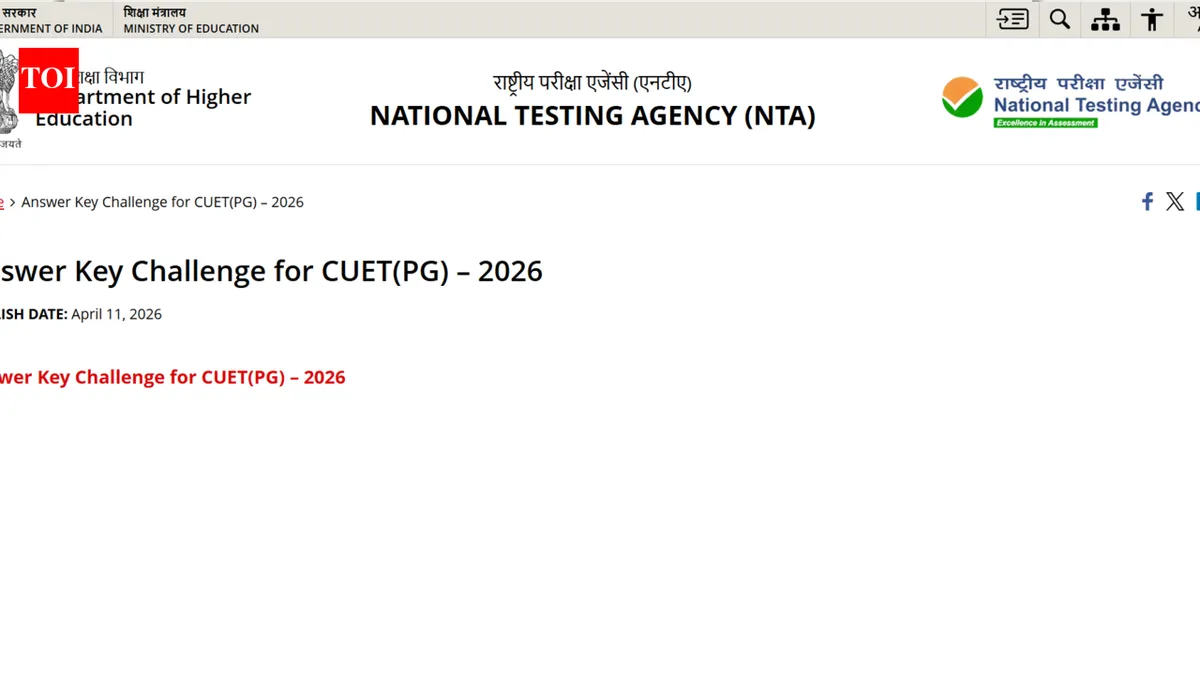
The release of the CUET PG 2026 answer key and response sheet marks a pivotal moment for thousands of aspiring postgraduate students across India. With the stakes higher than ever, candidates are now faced with the crucial task of evaluating their performance and preparing for the next steps in the admissions process. The implications of these developments extend far beyond mere scores, influencing the academic futures of many.
As the National Testing Agency (NTA) unveiled the answer key on its official website, exams.nta.nic.in, candidates were given the opportunity to challenge any discrepancies they might find. This challenge window is open from April 11 to April 14, 2026, with an objection fee set at ₹200 per question, a non-refundable charge that underscores the seriousness of the examination process. The final answer key, which will be released after a thorough review, will be binding, ensuring that the results are both fair and transparent.
Understanding the safe score ranges is crucial for candidates as they navigate this competitive landscape. For the General category, a safe score is estimated to be between 210 and 230, while OBC candidates should aim for scores between 200 and 220. SC candidates have a target range of 180 to 200, and for ST candidates, a safe score is between 160 and 180. These figures provide a benchmark for aspirants as they assess their chances of securing admission to prestigious institutions.
One of the most significant outcomes of the CUET PG 2026 results will be the subsequent admissions process at Jawaharlal Nehru University (JNU) for the academic year 2026-27. JNU has announced that admissions will commence only after the CUET PG results are declared, emphasizing the importance of this examination in shaping the academic landscape for postgraduate studies in India. Candidates must have appeared for CUET PG 2026 to be eligible for JNU admissions, making this examination a critical gateway for many.
In addition to JNU, other institutions are also closely monitoring the CUET PG results, as they will influence their own admission processes. For instance, admissions to the MSc (Biotechnology) program will be based on the GAT-B score, further highlighting the interconnected nature of these examinations and the importance of achieving a competitive score.
As candidates prepare to challenge the answer key and await the final results, uncertainties loom over the exact cut-off marks and the implications for individual institutions. The competitive nature of postgraduate admissions in India means that every point counts, and candidates are advised to stay updated on the latest developments. Details remain unconfirmed regarding the final cut-off scores and how they will affect admissions across various universities.
In conclusion, the CUET PG 2026 examination serves as a crucial juncture for aspiring postgraduate students in India. With the release of the answer key and the subsequent challenge process, candidates are now more engaged than ever in their academic futures. As the admissions landscape continues to evolve, the outcomes of this examination will undoubtedly shape the paths of many students in the years to come.