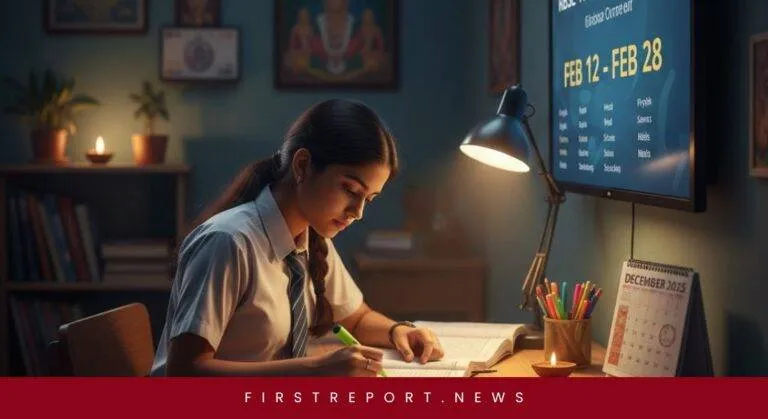
The CBSE Board Exam 2026 Phase 2 is set to provide a crucial lifeline for Class 10 students, allowing them a second opportunity to enhance their academic performance. This initiative, announced recently, aims to reduce the stress associated with board examinations by enabling students to retake exams in specific subjects.
Beginning May 15, 2026, the offline exams will span six days, concluding on May 21. Students who appeared in at least three subjects during the first board exam are eligible for this second chance. They can choose up to three subjects—such as Mathematics and Science—to improve their scores.
As the clock ticks down to the exam dates, anticipation builds. The detailed schedule reveals that Mathematics will be the first subject tested on May 15, while Social Science wraps up the series on May 21. Students must remember one critical detail: they need to carry their admit cards issued by their respective schools.
This move comes as a response to growing concerns over student anxiety linked to academic performance. By providing an additional opportunity, CBSE hopes to alleviate some of this pressure. Yet, it remains uncertain how many students will take advantage of this chance or whether it will significantly impact overall results.
“CBSE 2nd Board Examination 2026 Date Sheet (Class X) released!” echoed across school corridors and social media platforms alike, igniting discussions among students and parents about strategies for improvement.
While the prospect of retaking exams may seem daunting, it also offers a glimmer of hope for those who felt unprepared or overwhelmed during their initial attempt. Many will welcome this opportunity as a chance not merely to raise grades but also to regain confidence.
As we approach the exam dates, one question lingers—how prepared are students for this unique challenge? Preparation strategies are likely being discussed in classrooms and homes across the country.
In essence, the CBSE Board Exam 2026 Phase 2 is more than just an academic formality; it’s a pivotal moment that could redefine student experiences and outcomes in Indian education.