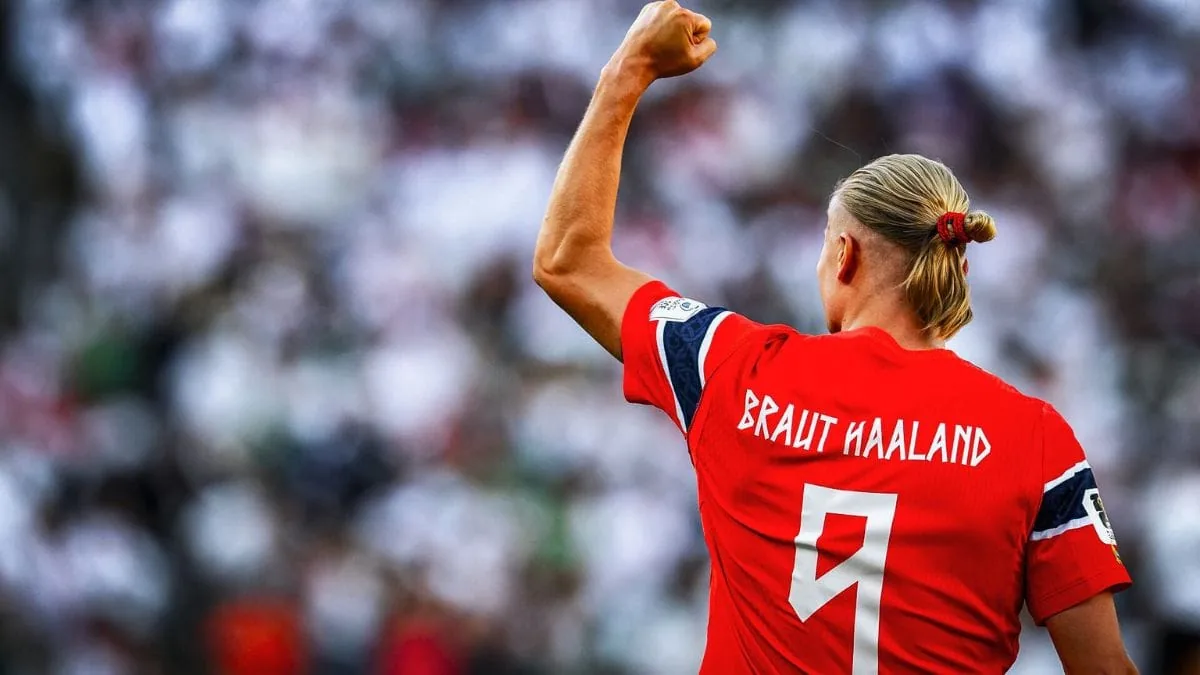
The small Norwegian farming town of Bryne, near Stavanger, is celebrating the impact of its hometown hero, Erling Haaland, as Norway progresses in the World Cup. Residents and local officials express immense pride in the striker, who grew up and trained in Bryne. The town, which last saw Norway qualify for the World Cup in 1998, is experiencing a renewed sense of community and excitement due to Haaland’s success.
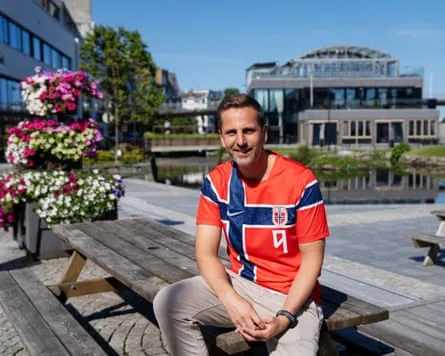
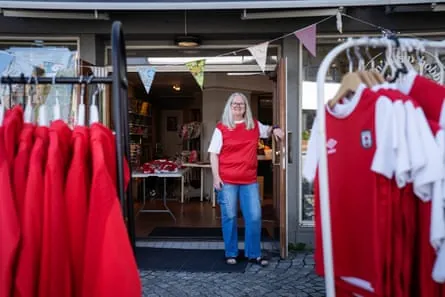
Olinda Haaland, who shares the same surname but is not a relation, noted the widespread enthusiasm for football in Bryne. Her fabric shop in the town’s central square has seen a steady demand for Haaland shirts and red apparel, with retro 1998 World Cup shirts selling out quickly. She described the atmosphere as “pure joy,” highlighting Haaland’s positive influence on Bryne.
Haaland’s Local Roots and Community Impact
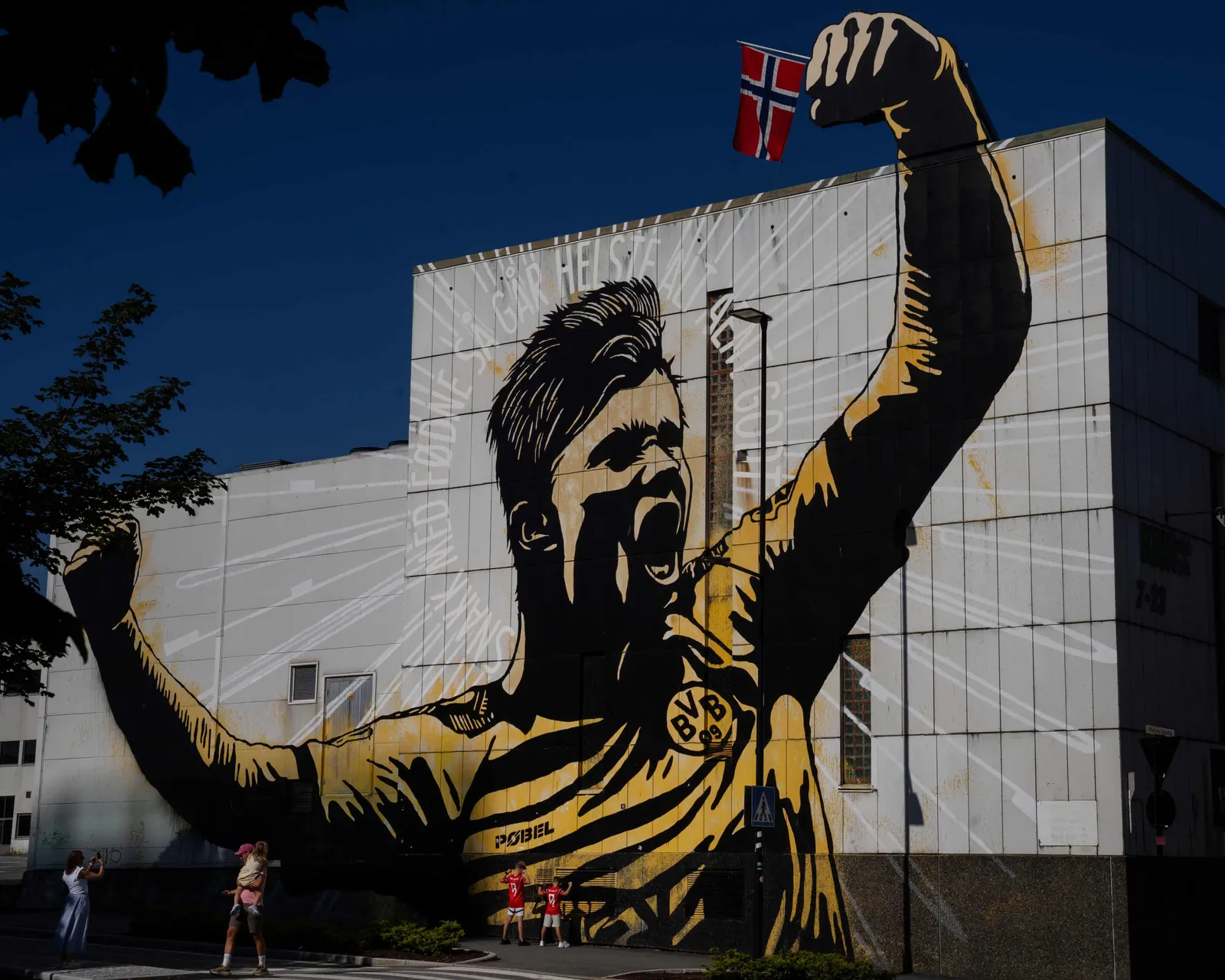
Despite being born in Leeds, where his father, Alf-Inge Haaland, played for Leeds United, Bryne is recognised as the place where Haaland developed into the footballer he is today. The Manchester City striker, who stands 1.95 meters tall, frequently visits his old haunts in the town. He also contributes to the community by donating football equipment to children and organising reading competitions. A 16th-century book of Viking sagas, purchased by Haaland, is expected to arrive at the local library in the autumn.
Andreas Vollusund, the mayor of Bryne and Haaland’s former schoolteacher, emphasised the significant impact the 25-year-old has had on the town. Vollusund, who taught Haaland when he was 10, described him as a child who was “funny, he loved joking with others, lots of energy, loved sports, loved football.” He recalled Haaland stating at the age of 10 that he intended to become a professional footballer, demonstrating early focus.
Vollusund attributes Haaland’s success partly to Bryne’s grounded, hardworking farming culture and the characteristics he inherited from his parents. His mother was a national heptathlon champion, underscoring a strong athletic lineage. The Norwegian approach to youth sports, which prioritises fun, is also seen as a factor in nurturing world-class athletes across various disciplines, including football.
Haaland’s influence extends to inspiring young people in Bryne. Vollusund noted that Haaland demonstrates that it is possible to achieve global recognition even when coming from a small town. This sentiment resonates with children like Emilian, 10, and his brother Leander, seven, who visited Bryne to see where Haaland’s journey began. Their mother, Chantal Samsing, and father, Christopher Gundersen, commented on the unifying effect Haaland’s success has had across Norway, describing it as “bigger than football.”
World Cup Performance and Growing Stardom
Haaland’s performance in the current World Cup has significantly elevated his global profile. He is a prominent figure as Norway prepares to face England in the quarter-finals. His match-winning brace against Brazil in the round of 16 secured Norway’s best result in the tournament and contributed to his total of seven goals, placing him among the top scorers in the competition, trailing only Lionel Messi and Kylian Mbappe.
This tournament marks Norway’s first World Cup appearance since 1998, and Haaland’s contributions have been crucial in their unexpected run. His impact has garnered widespread attention, particularly in the United States. Beyond his goal-scoring abilities, Haaland’s personality has also captivated audiences. He is described as a self-deprecating and cheerful figure, often seen celebrating with genuine joy, particularly when his teammates score.
Hakon Grottland, head of player development for the Norwegian Football Federation, highlighted Haaland’s dedication, recalling a video of a 16-year-old Haaland practicing shooting drills long after his teammates had left. Grottland suggested that Haaland’s early struggles and subsequent relentless training contributed to his current prowess. This work ethic, combined with his physical attributes, has transformed him into a formidable player.
Haaland’s tactical role under Norway manager Stale Solbakken differs from his club responsibilities at Manchester City. Solbakken has designed a 4-3-3 counter-attacking system that maximises Haaland’s strengths, allowing him to operate effectively both as a spearhead and by dropping deeper to create scoring opportunities. This adaptability was evident in his goal against Brazil, scored from outside the box.
Early Development and Unique Qualities
Haaland’s journey to becoming a world-class player was not always straightforward. Early talent camps organised by the Norwegian federation did not always see him stand out. For instance, at a camp in Stavanger in June 2014, coaches were asked to identify players likely to achieve full international honours, and none selected Haaland. However, it was shortly after this period that Haaland experienced a significant growth spurt, reportedly growing 20cm and gaining 20 kilograms in a year.
Despite his physical development, Haaland’s confidence was evident from a young age. Brede Hangeland, former Norway captain and now assistant coach, recalled Haaland, then a teenager, confidently outlining his ambition to become the best forward in the world. Alf Ingve Berntsen, who began coaching Haaland at the age of eight at Bryne FK stadium, noted Haaland’s early passion and goal-scoring ability, describing it as a “fire” and “passion” that was apparent even then.
Haaland’s current international record includes scoring in each of his last 14 games for Norway, accumulating 62 goals in 54 international matches. His ability to score with both feet, his head, from inside the box, and from outside the box, as demonstrated by his seven goals in the current World Cup, highlights his versatility. Norway is scheduled to play England in the 2026 FIFA World Cup quarter-final at the Miami Stadium.
Read Also
Source: theguardian.com