Who is involved
In the bustling city of Kolkata, the anticipation surrounding the electoral process has taken a disheartening turn. Just weeks before the local elections, several lakhs of electors found themselves in a precarious situation, unable to access the first supplementary voter list. This development has left many feeling anxious and uncertain about their voting rights, a fundamental aspect of democracy that they hold dear.
The expectation was that the supplementary list would provide clarity and assurance to voters, allowing them to confirm their eligibility ahead of the elections. However, the reality was starkly different. The chief electoral officer announced that the supplementary list would be made available only after 9 pm, a decision that left many in the dark and scrambling for answers. As the clock ticked closer to the deadline, anxiety levels soared among voters who had submitted their documents but found their names still under adjudication.
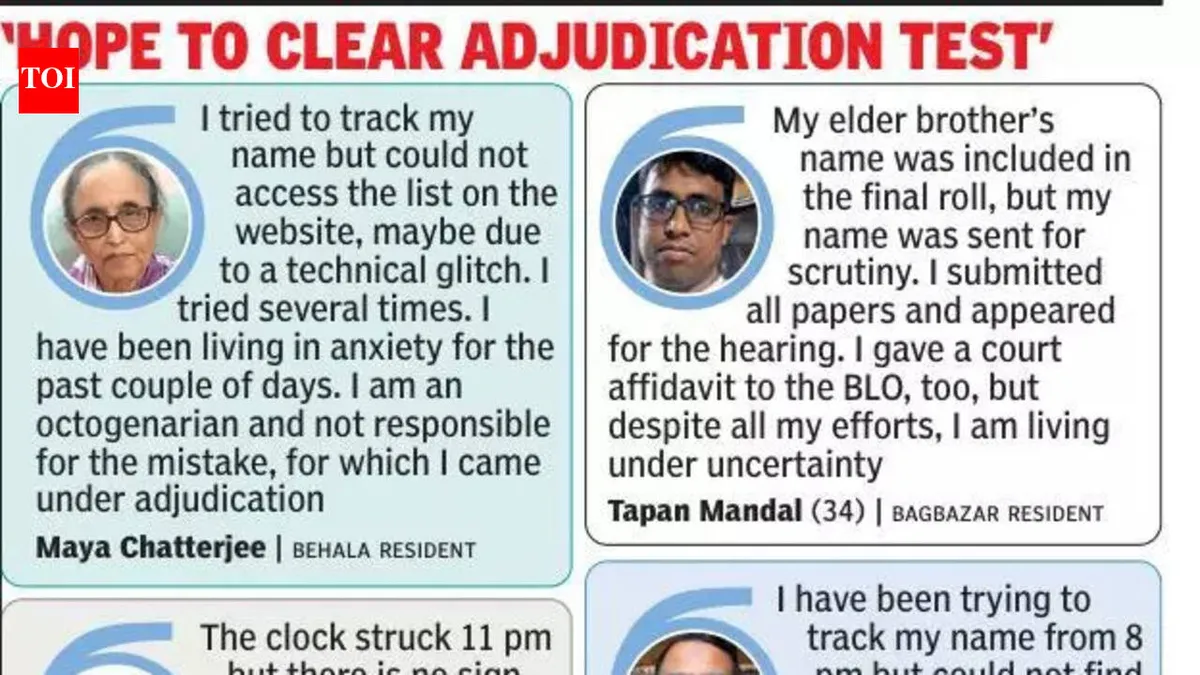
The immediate effects of this situation were palpable. Electors like Maya Chatterjee, an octogenarian, expressed her frustration, stating, “I tried to track my name but could not access the supplementary list on the website, maybe due to a technical glitch.” Her concerns were echoed by Shah Umayer Ahamed, whose mother remained under the ‘adjudication’ category despite having submitted all necessary documentation. This uncertainty has not only affected individuals but has also cast a shadow over the electoral process itself, raising questions about the efficiency and reliability of the system.
Soumik Bhattacharya, a heart patient, waited until midnight for the supplementary list to be released, only to find himself disappointed and confused. “Was it a joke that the first supplementary list would be out post 9 pm?” he lamented, highlighting the frustration felt by many in similar situations. The inability to access the list has left voters like Musa Kalim Molla in a state of worry, as he reported, “I am worried. When I submitted my voter ID number, it was showing under adjudication.” Such sentiments reflect a growing discontent among the electorate, who feel their rights are being compromised.
As the situation unfolds, the implications for the electoral process in Kolkata are significant. The anxiety surrounding voter access is not just a personal issue; it has broader implications for the integrity of the elections. With the deadline for voter registration looming, the stakes are high. Researcher Sabir Ahamed’s father also faced similar challenges, marked under adjudication and unable to find his name on the website. The collective experiences of these voters paint a troubling picture of an electoral system struggling to meet the needs of its constituents.
In the backdrop of this crisis, the importance of voter ID measures has been underscored. Voter Authority Certificates can be applied for by those lacking accepted photo IDs, which include passports, driving licenses, and Blue Badges. This provision aims to ensure that every eligible voter has a chance to participate in the democratic process, yet the current situation raises questions about the accessibility and efficiency of such measures.
Experts have weighed in on the matter, emphasizing the need for a more streamlined process to prevent such issues from arising in the future. The anxiety felt by voters in Kolkata is a reminder of the critical role that transparency and accessibility play in the electoral process. As the local elections approach, the hope is that the electoral authorities will address these concerns promptly, ensuring that every citizen can exercise their right to vote without fear or confusion.
As the city waits for clarity, the voices of the voters echo a common plea for a fair and transparent electoral process. The struggle for access to the voter card is not just about a piece of identification; it is about the very essence of democracy and the right to have a say in the governance of one’s community. The coming days will be crucial in determining how these issues are resolved and whether the electorate can regain their confidence in the system that governs them.