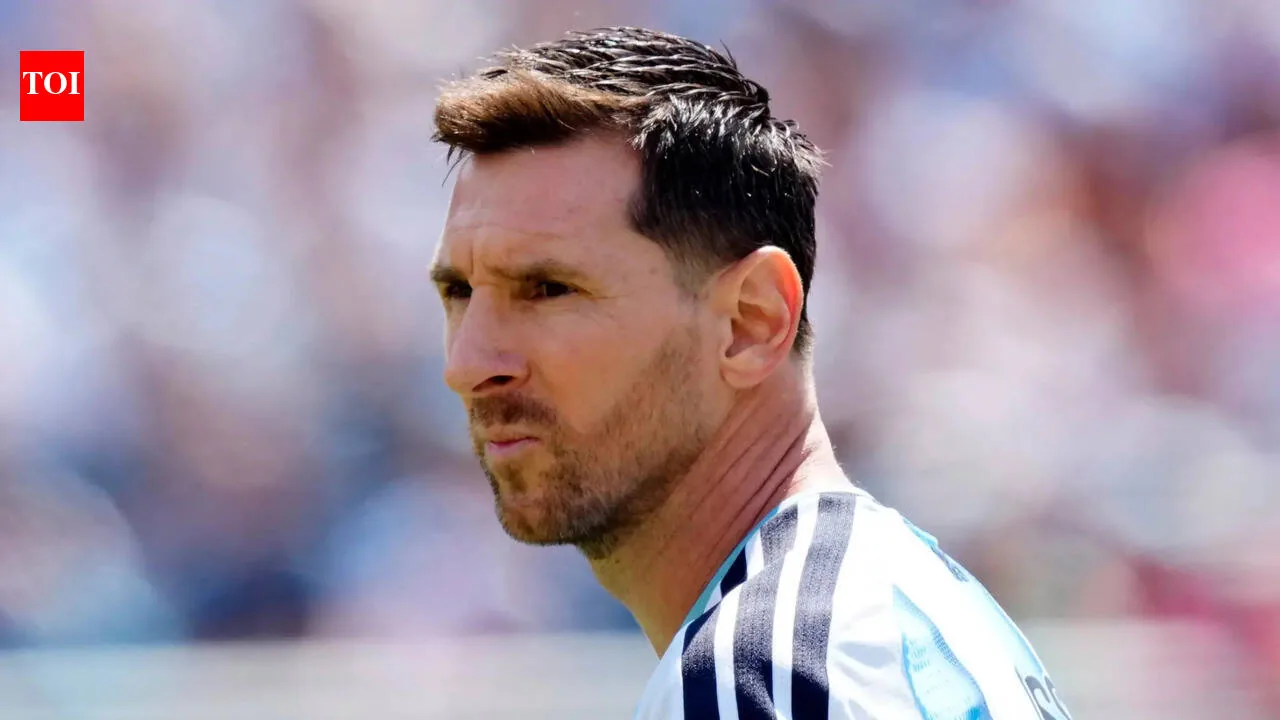
A leaked police dossier has reportedly revealed the extent of security threats investigated during the 2026 FIFA World Cup, with Argentina captain Lionel Messi allegedly emerging as the primary target of multiple terror threats throughout the tournament. The documents, first reported by a Spanish newspaper, describe a series of incidents involving bomb threats, stalking cases, and online abuse directed at players, referees, and officials as security agencies worked throughout the competition.
According to Spanish newspaper Informacion.es, which stated it had reviewed the police dossier, Argentina and Messi featured prominently in several of the highest-priority security alerts handled during the tournament jointly hosted by the United States, Canada, and Mexico. The reports describe Messi as the player who attracted the greatest number of terror-related threats during the tournament.
Alleged threats against Messi
One of the most serious incidents reportedly occurred before Argentina‘s match against Jordan, when a caller contacted authorities claiming he and two other individuals planned to enter the stadium carrying “homemade bombs and an AR-15.” The dossier reportedly stated that the caller threatened to attack “police officers and players from both both teams” while making “special mention” of Messi.
Another alleged threat was linked to Argentina‘s meeting with Egypt in Atlanta. According to the police report cited by Informacion.es, an X user posted: “I’m about to enter the Atlanta stadium and blow up Messi with four bombs strapped to my body.” During the same match, another individual reportedly contacted police claiming three explosive devices had been placed inside rubbish bins around the stadium. The report said bomb disposal units and specialist canine teams subsequently searched the venue.
The reported threats were investigated as part of a wider security operation involving US authorities and international agencies. According to the reports, all of the threats were investigated as part of the tournament’s extensive security operation.
Security concerns for other players and officials
The leaked documents also reportedly detailed repeated security incidents involving Portugal captain Cristiano Ronaldo. According to the dossier, a FIFA employee alerted authorities after “a suspicious man” sought information about Ronaldo’s accommodation during the tournament. The report also described several other incidents in Houston, Toronto, and Miami involving supporters attempting to gain access to the Portuguese forward.
In one case, a man attempted to board a lift with Ronaldo, later telling officers he simply wanted to take a selfie with the Portugal captain. In Toronto, another person was arrested in a similar incident after trying to get into a lift with Ronaldo, claiming he only wanted to take a selfie with him.
The police documents reportedly extended well beyond threats directed at football’s biggest stars. French referee François Letexier allegedly received threatening WhatsApp messages following the Argentina–Egypt match, while video assistant referee Willy Delajod was also subjected to abusive messages and death threats.
According to the dossier, several players also became targets following performances during the tournament. The report cited online xenophobic abuse directed at France forward Kylian Mbappé, including claims that an effigy bearing his likeness was burned and shared on social media. Norwegian striker Alexander Sørloth and his wife were also reportedly threatened after he missed a goalscoring opportunity, while Colombia international Jaminton Campaz allegedly received threats following a missed penalty that prevented him from travelling home with the rest of his national team.
The documents further claimed that South Korea head coach Hong Myung-bo and the entire South Korean squad required a significant police escort to the airport after authorities received death threats directed at the team following its group-stage elimination.
A joint security network involving the FBI and the Centre for International Police Cooperation (IPCC) monitored terror threats, stalking incidents, and violent messages directed at players, match officials, and their families throughout the competition.
Source: goal.com