In the rapidly evolving landscape of technology, expectations surrounding artificial intelligence (AI) were once largely speculative. Many viewed AI as a tool that would enhance existing workflows but not fundamentally alter the fabric of hiring and productivity. Traditional hiring practices remained entrenched, with companies relying heavily on human resources to meet their operational needs.
However, a decisive moment arrived when Salesforce CEO Marc Benioff announced that AI-powered coding tools were significantly boosting productivity, allowing for a shift in hiring strategies. In 2025, Salesforce reported a staggering 282% increase in AI implementation, underscoring a newfound commitment to embedding AI into core operations.
This shift has had immediate effects on the tech industry. Benioff revealed, “I’m not hiring more engineers in FY26 because I was using coding agents and I was allowing the productivity from the coding agent to give me the extra capacity that I needed for the year.” This statement encapsulates a broader trend where companies are leveraging AI to optimize their workforce.
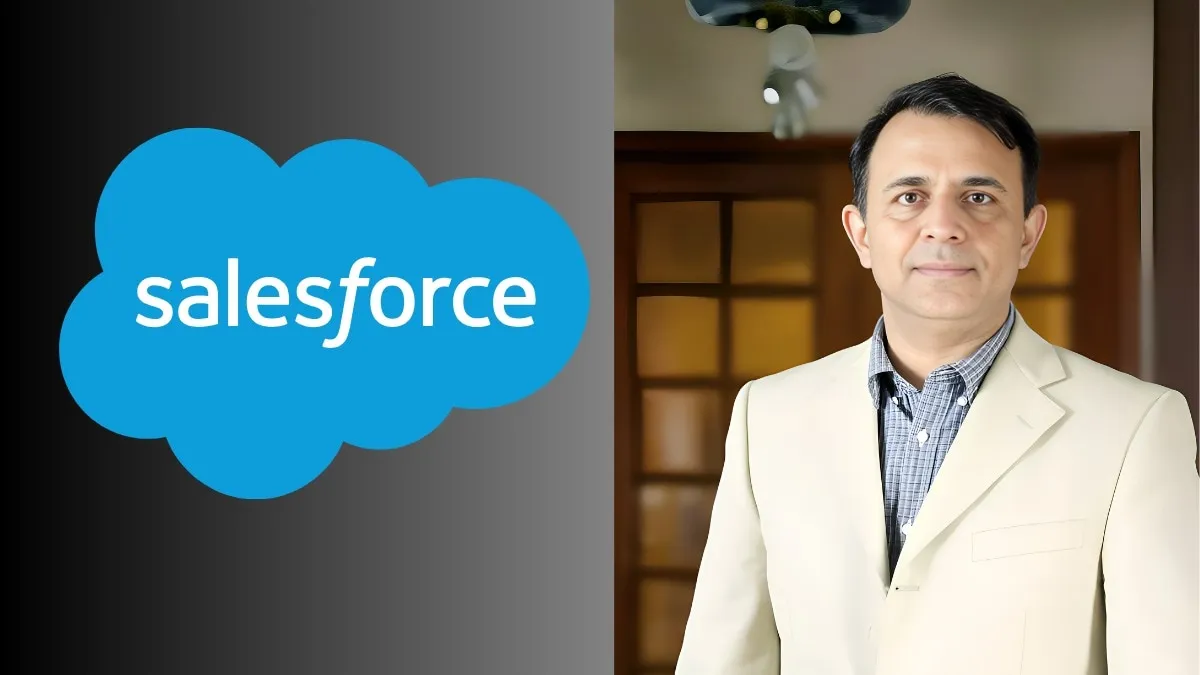
According to Salesforce’s State of Sales data, a remarkable 91% of Indian sales professionals now view AI agents as critical to business success, highlighting the growing reliance on AI across various sectors. Deepak Pargaonkar, a key figure at Salesforce, emphasized that AI agents are only as intelligent as the unified, real-time information they draw from, indicating a need for robust data infrastructure.
Salesforce’s innovative approach, termed Enterprise General Intelligence (EGI), aims to operationalize AI across business workflows, ensuring that these technologies are not just supplementary but integral to daily operations. The company’s Agentforce ecosystem boasts nearly 800 reusable agent assets from over 160 partners, illustrating the collaborative nature of this AI revolution.
In contrast, Oracle CEO Mike Sicilia reassured stakeholders that AI tools would not spell doom for traditional software companies. He stated, “AI is not here to replace expertise – it’s here to elevate it by taking on the invisible complexity underneath ideas like analysis coordination and prediction.” This perspective reflects a growing consensus that AI will augment human capabilities rather than replace them.
As the competition heats up, Oracle is ambitiously aiming to build the world’s largest AI cloud, introducing 22 new AI-driven Fusion Applications to the market. This move signifies a commitment to harnessing AI’s potential while maintaining the relevance of traditional software solutions.
Overall, the transition from chatbots to autonomous, agentic systems is reshaping hiring, workflows, and decision-making in companies. Deepak Pargaonkar noted, “These aren’t experiments anymore, they’re augmenting human judgment in real workflows,” reinforcing the notion that AI is now a critical component of business strategy.
As organizations adapt to this new reality, the implications for workforce dynamics and productivity are profound. The integration of AI into everyday business practices is not merely a trend but a fundamental shift that will define the future of work.