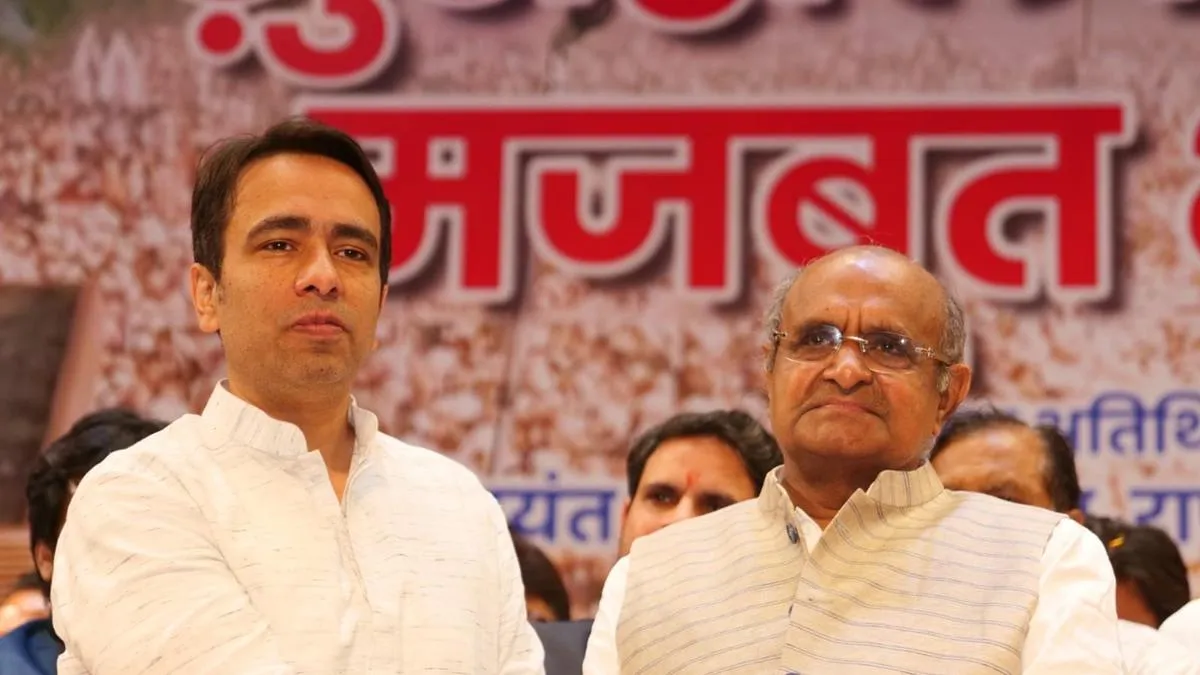
In the landscape of Indian politics, K.C. Tyagi has long been a prominent figure, particularly as a founding member of the Janata Dal-United (JD(U)). For decades, he was synonymous with the party, serving as its chief national spokesperson and national secretary general. His relationship with Nitish Kumar, a key leader of the JD(U), was characterized by a shared vision and camaraderie that spanned nearly 50 years.
However, the political tides began to shift when Tyagi announced his resignation from the JD(U) on March 17, 2026. This unexpected move sent ripples through the political community, as Tyagi had been a stalwart of the party since its inception. His departure raised questions about the future of the JD(U) and its ability to maintain its influence.
Just days later, on March 22, 2026, Tyagi made headlines once again by formally joining the Rashtriya Lok Dal (RLD). This transition marks a significant pivot in his political career, as he returns to the party he initially helped establish in 1974. Tyagi’s decision to align with the RLD is driven by a renewed commitment to farmer welfare and the interests of the downtrodden, peasants, and agriculturalists.
In his own words, Tyagi stated, “My commitment to the broader ideological points concerning the interests of the downtrodden, peasants and agriculturalists, including the deprived sections of society, remains as firm as ever.” This statement underscores his desire to continue advocating for those who have been marginalized in society.
Interestingly, Tyagi expressed that he does not perceive a significant difference between the JD(U) and the RLD, noting that both parties share similar ideologies. He remarked, “I don’t see any difference between Lok Dal, RLD and JDU,” suggesting that his political beliefs remain intact despite the change in affiliation.
Experts believe that Tyagi’s move could bolster the RLD’s position in western Uttar Pradesh, an area critical for political alliances. He stated, “A strong Rashtriya Lok Dal in western Uttar Pradesh will give more strength to the alliance,” indicating his strategic vision for the party’s future.
As Tyagi embarks on this new chapter, the implications for both the RLD and JD(U) are profound. The RLD stands to gain a seasoned politician with deep roots in the region, while the JD(U) faces the challenge of filling the void left by Tyagi’s departure.
With this shift, the political landscape in Uttar Pradesh is poised for change, and Tyagi’s influence will undoubtedly play a pivotal role in shaping the future of the RLD. The coming months will reveal how this transition impacts the dynamics of power in the region.
Details remain unconfirmed regarding the immediate reactions from other political leaders, but Tyagi’s move has certainly set the stage for a new political narrative in India.