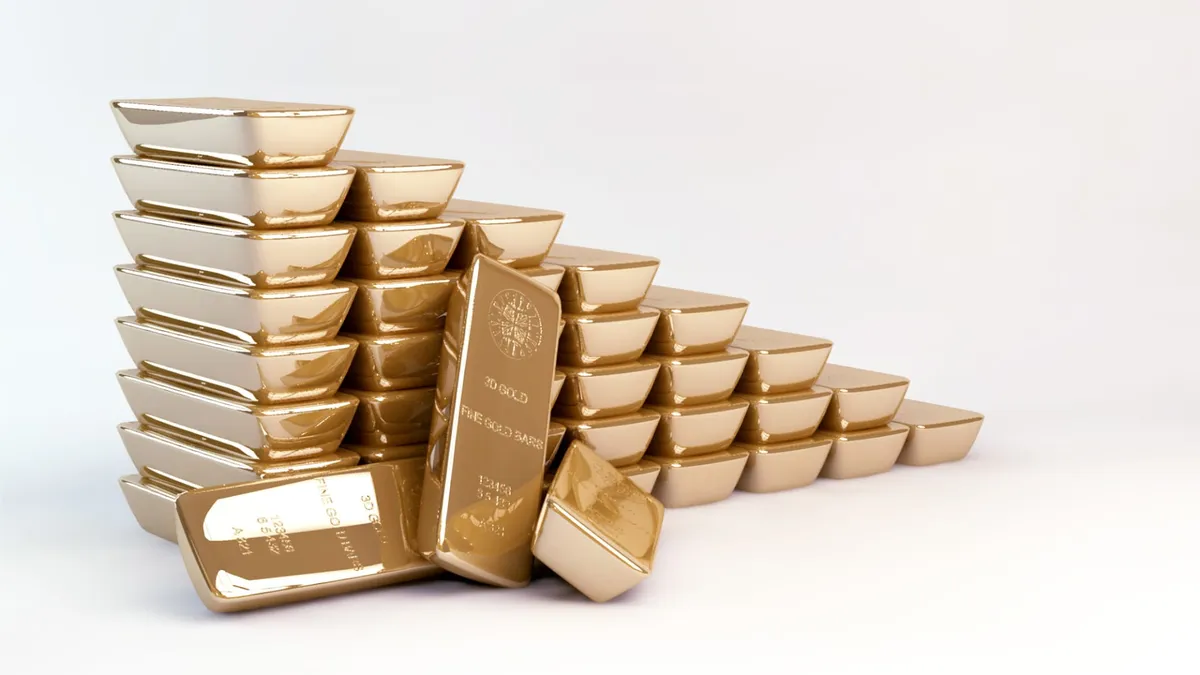
Gold’s role as a consumer good and an investment asset is shaped by its scarcity and usefulness to individuals and institutions. Recently, the gold market has seen a notable shift, with prices pulling back after a sharp rally. As of April 3, 2026, international spot gold is trading at approximately $4,650.20 per ounce, reflecting a decline of about 2.80%.
In India, this trend has been mirrored in domestic rates, which have fallen by approximately ₹3,980 per 10 grams. The current average price for 24K gold now stands at ₹1.48 lakh per 10 grams, indicating a significant adjustment in the market.
For those looking to invest, the prices for various gold purities are as follows: 24K Gold (99.9%) is priced at ₹14,897 per gram, while 22K Gold (91.6%) is at ₹13,655 per gram. The 18K Gold is available for ₹11,173 per gram.
The backdrop to this decline is a robust trading environment; in 2025, gold traded at a record average of $361 billion per day. Central banks and official institutions collectively hold nearly 39,000 tonnes of gold, valued at approximately $5 trillion, which constitutes about 26% of global allocated reserves.
Despite the recent pullback, gold remains a critical asset in the financial landscape, with approximately 220,000 tonnes of gold available above ground. This scarcity, coupled with the significant value of the gold market, which is estimated at $31 trillion, continues to attract a wide range of participants.
Initial reactions from market analysts suggest that this pullback could be a temporary adjustment rather than a long-term trend. Observers are keenly watching how these fluctuations will influence investor behavior and market stability in the coming weeks.
As the situation develops, officials and analysts alike are expected to provide further insights into the potential implications for both domestic and international gold markets. The future trajectory of gold prices remains a topic of intense scrutiny among investors and financial experts.