Reaction from the field
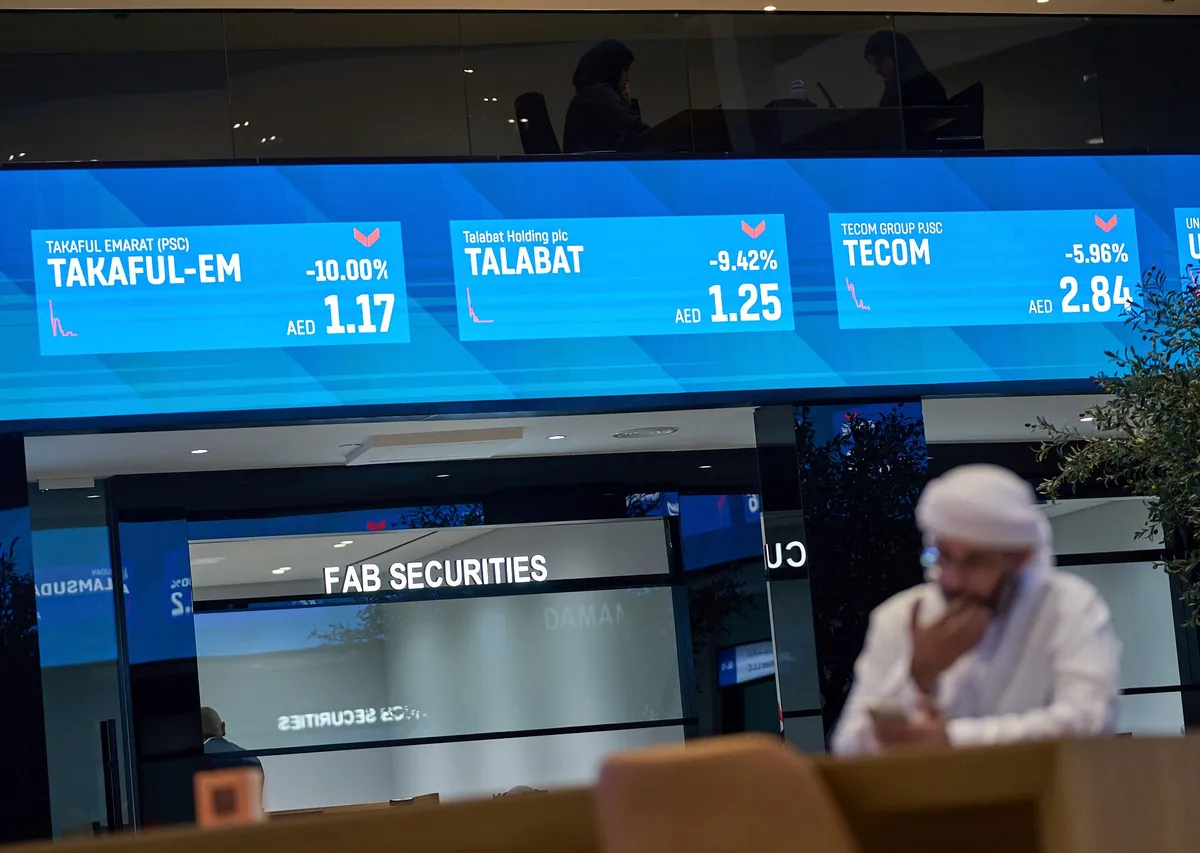
The Dubai Iran War has unleashed a wave of economic turmoil across the United Arab Emirates, with stock markets in Dubai and Abu Dhabi suffering a staggering loss of around $120 billion since the onset of the US-Israel conflict with Iran. The repercussions of this war are not just confined to the battlefield; they are reverberating through financial markets and energy supplies, creating a climate of uncertainty and fear.
Since February 28, 2026, Dubai’s benchmark index has plunged approximately 16 percent, reflecting a broader trend of investor panic and declining market confidence. The Dubai Financial Market (DFM) General Index alone has seen a loss of about $45 billion in market capitalization, while the Abu Dhabi Securities Exchange (ADX) General Index has shed around $75 billion. This financial fallout underscores the vulnerability of the UAE’s economy amidst escalating regional tensions.
Adding to the chaos, a recent drone attack on the Al-Salmi tanker, which was anchored at Dubai Port and loaded with two million barrels of oil from Kuwait and Saudi Arabia, has heightened fears of further disruptions to energy supplies. Although no oil leakage or injuries were reported, the incident serves as a stark reminder of the conflict’s proximity and its potential to affect critical infrastructure. As Zein Basravi noted, “These attacks seem to be getting closer, they’re getting louder, and one of them hit that oil tanker off the coast of the waters of Dubai.”
The ongoing conflict, which has lasted for over a month, has resulted in thousands of casualties and significant disruptions to energy supplies across the region. The price of Brent crude has surged by 59 percent in March alone, reflecting the heightened risk and instability in oil markets. This spike in prices is not just a statistic; it translates into higher costs for consumers and businesses alike, further straining the economic landscape.
Despite the immediate financial setbacks, some analysts maintain a level of optimism regarding the UAE’s long-term economic prospects. Haytham Aoun remarked, “It is clearly a short-term setback to investor sentiment and market confidence, but not necessarily a fundamental challenge to the UAE’s long-term economic plan.” This perspective suggests that while the current situation is dire, the UAE may still have the resilience to recover once stability is restored.
As the conflict continues to escalate, the geopolitical landscape remains fraught with uncertainty. Iran’s foreign policy, particularly its stance towards Saudi Arabia, adds another layer of complexity. Abbas Araghchi stated, “Iran respects the Kingdom of Saudi Arabia and considers it a brotherly nation,” indicating a potential for diplomatic engagement even amidst the chaos. However, the reality on the ground remains precarious, with tensions likely to persist as long as the conflict rages on.
Details remain unconfirmed regarding the long-term impact of the war on the UAE’s financial markets. Investors and analysts alike are left grappling with the unknowns of a conflict that has already reshaped the economic landscape of the region. As the situation evolves, the eyes of the world remain fixed on Dubai, a city that has become a barometer for the broader implications of the Dubai Iran War.