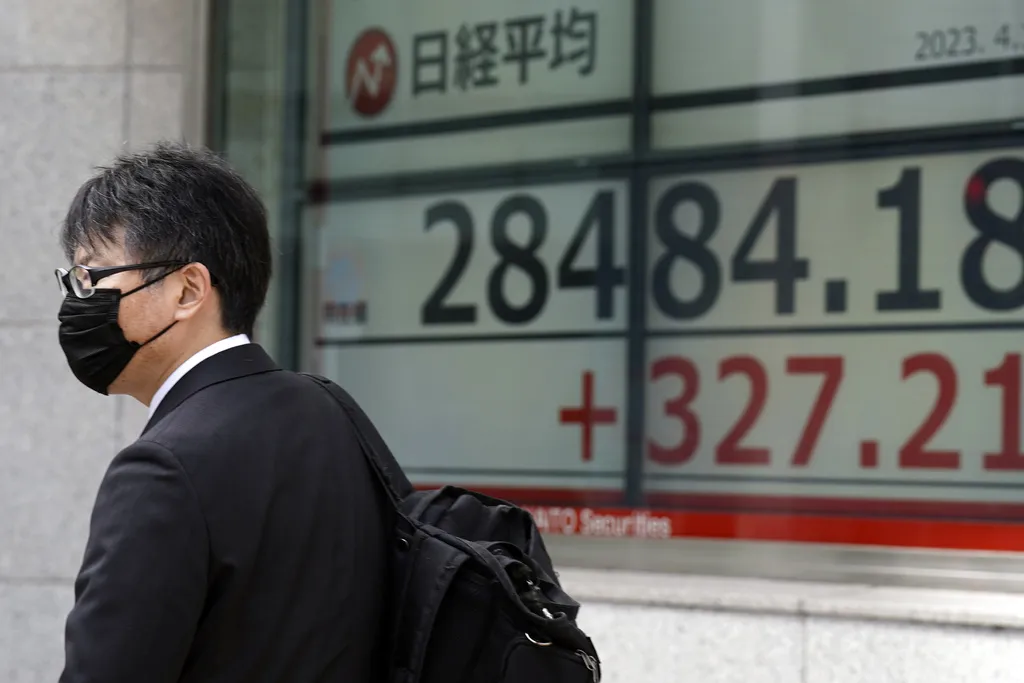
What is driving the recent turmoil in Asian markets today? The answer lies in a combination of geopolitical uncertainty and a broader market correction, as most Asian stock indices tumbled significantly.
South Korea’s Kospi cracked 6.5%, while China’s Shanghai Composite index fell over 3.6%. Hong Kong’s Hang Seng index lost more than 3.5%, and Japan’s Nikkei 225 index dropped almost 3.5%. Singapore’s Straits Times index also declined about 2.2%.
The backdrop to this market downturn is the ongoing uncertainty surrounding the US-Iran war, which has left investors wary. Siddhartha Khemka noted, “The ongoing recovery is likely to remain fragile and contingent on further clarity around geopolitical developments.” This sentiment reflects the cautious approach many investors are taking in light of the current global climate.
In Japan, the Nikkei 225 saw a decline of 1.6% today, while South Korea’s Kospi plunged 3.6%. The Nasdaq, a key indicator of tech stocks in the U.S., confirmed a correction by falling more than 2%, further influencing market sentiment across Asia.
Interestingly, while most Asian markets faced declines, the Indian stock market saw a different trend. The Sensex jumped 1,205.00 points, or 1.63%, to close at 75,273.45, showcasing a stark contrast to the broader regional downturn.
As these markets react to external pressures, the volatility underscores the interconnectedness of global finance. Investors are closely monitoring developments in the geopolitical landscape, as any escalation could further impact market stability.
Details remain unconfirmed regarding the potential long-term effects of these tensions on Asian markets. The situation remains fluid, and market participants are bracing for continued fluctuations as they navigate through this uncertain environment.