How it unfolded
As the sun dipped below the horizon on April 1, 2026, the atmosphere at Kennedy Space Center in Florida was electric. Thousands of spectators gathered, their eyes fixed on the launch pad, where NASA’s Artemis II mission was about to make history. This mission, the first crewed flight of NASA’s Artemis program, was set to launch at 6:35 p.m. EDT, marking a monumental moment in space exploration after a 50-year hiatus since humans last ventured beyond low Earth orbit.
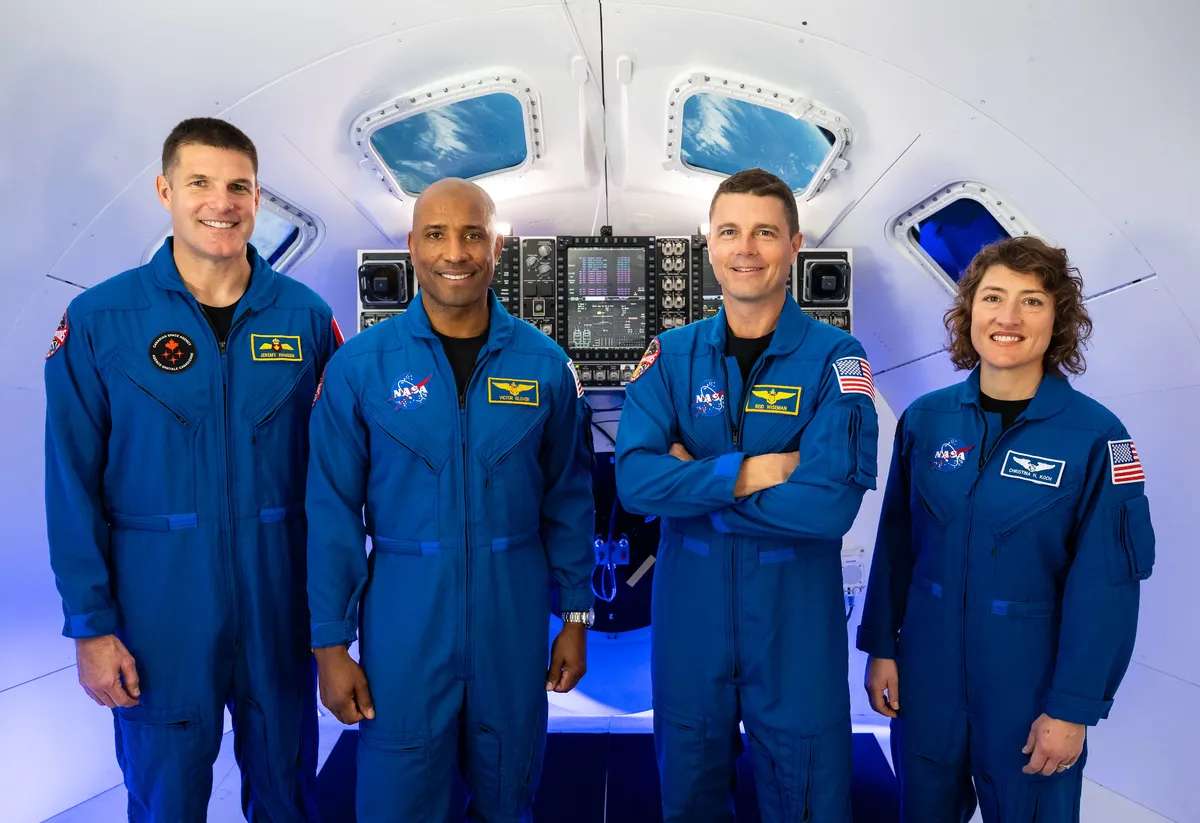
The countdown clock ticked down to zero, and with a roar, the Orion spacecraft lifted off, embarking on a journey that would take it more than 400,000 kilometers to the Moon. The crew, consisting of four skilled astronauts—Reid Wiseman, Victor Glover, Christina Koch, and Jeremy Hansen—was poised to conduct a mission that would last approximately 10 days. Their objective was not to land on the lunar surface but to perform a lunar flyby, coming within 70,000 kilometers of the Moon, a feat that would allow them to photograph both the Moon and Earth from a vantage point seldom seen by human eyes.
As the Orion spacecraft soared into high Earth orbit, it reached a distance of 46,000 miles beyond Earth. The mission was not just about the breathtaking views; it was a critical test of the Orion spacecraft’s systems and hardware for deep space travel. The European Service Module (ESM), a vital component of the mission, provided life support and propulsion, ensuring the crew’s safety and functionality during their journey.
NASA Administrator Jared Isaacman encapsulated the moment, stating, “Today’s launch marks a defining moment for our nation and for all who believe in exploration.” This sentiment echoed throughout the space community, as the mission represented a significant leap forward in humanity’s quest to return to the Moon and eventually reach Mars.
During the flight, the crew was tasked with conducting manual piloting demonstrations, a crucial aspect of validating the spacecraft’s capabilities. For the first time, life support systems would be tested with a crew on board, a milestone that would pave the way for future missions. As they navigated the vastness of space, the astronauts were also reminded of the challenges that lay ahead, with NASA Associate Administrator Amit Kshatriya noting, “Artemis II is a test flight, and the test has just begun.”
The mission’s significance extended beyond its immediate objectives. It served as a precursor to Artemis III, which would involve in-orbit lander docking tests, further pushing the boundaries of human space exploration. As the crew prepared for their lunar flyby, they were acutely aware that their journey was not just about reaching the Moon but about laying the groundwork for future exploration.
As the Orion spacecraft made its approach to the Moon, the crew experienced the thrill of flying past the far side, a region that had not seen human eyes since the Apollo missions. The excitement was palpable, as they captured stunning images of the lunar landscape, documenting their historic journey for future generations to witness.
As of now, the Artemis II mission stands as a beacon of hope and ambition for space exploration. It marks a new chapter in humanity’s relationship with the cosmos, reminding us that the spirit of exploration is alive and well. The successful completion of this mission will not only validate the technologies required for deep space travel but also inspire future generations to look up at the stars and dream of what lies beyond.